
Keeping Important Documents Safe in an RV
March 9, 2026 · By Magnolia RV Park
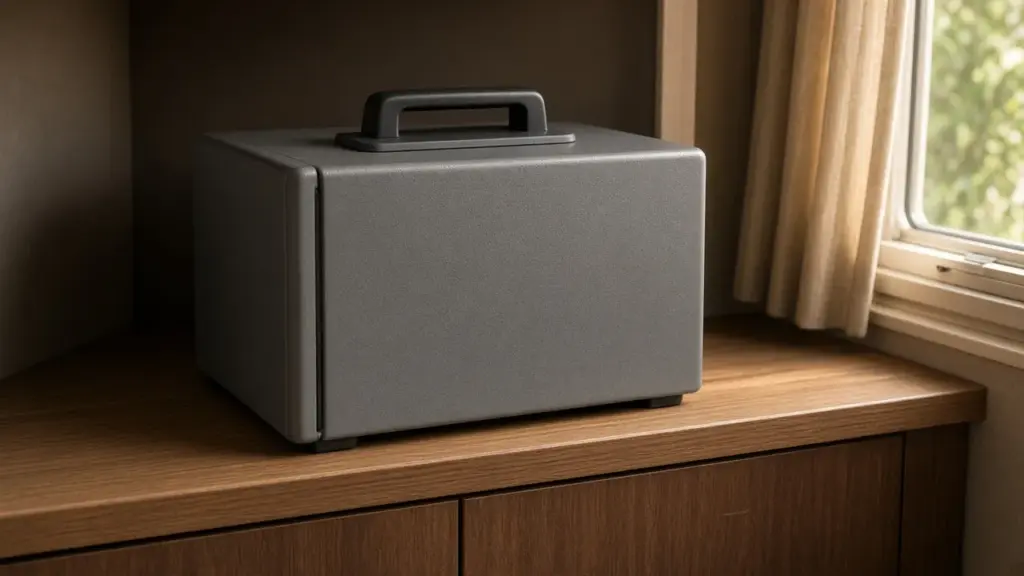
When you live in an RV, your home holds everything that matters, including the paperwork that proves who you are and what you own. Birth certificates, titles, insurance policies, medical records, and financial documents all need a safe place. RVs face risks that houses may not, such as leaks, humidity, theft, and storms. A little planning keeps your most important documents protected and easy to grab if you ever need to leave quickly.
This guide explains how to keep important documents safe in an RV. For a broader look at managing money and paperwork, see our pillar on full-time RV life on a budget.
Which Documents Matter Most
Start by identifying your most important documents:
- Birth certificates
- Social Security cards
- Passports and identification
- Vehicle and RV titles and registrations
- Insurance policies
- Marriage, divorce, and custody documents
- Wills, powers of attorney, and medical directives
- Medical records and prescriptions
- Financial account information
- Your park agreement
Some of these can be replaced with effort, but others are difficult or slow to replace.
Use a Fire-Resistant, Waterproof Box
A fire-resistant and waterproof document box is one of the best investments for RV residents. Look for:
- Fire and water resistance ratings
- A size that fits your documents without folding
- A secure latch or lock
- A handle for easy carrying
Store the box in a consistent, accessible place inside your RV, such as a closet or under-bed compartment.
Consider a Safe Deposit Box
For documents you rarely need, such as original birth certificates or wills, a safe deposit box at a bank adds protection. Keep copies in your RV and digital backups.
Make Digital Backups
Scan every important document and store copies securely. Our post on going paperless in an RV explains scanning and file organization. Use:
- Secure cloud storage with two-factor authentication
- An encrypted USB drive stored separately from your document box
Digital copies make replacing lost documents much easier.
Protect Against Humidity
Southeast Texas humidity can damage paper. Keep documents in sealed plastic sleeves inside your box. Add a moisture absorber packet. Check documents periodically for signs of moisture.
Protect Against Theft
RVs can be targets for theft. Do not leave documents in visible places or in your vehicle. Keep your box in a less obvious spot and consider a small safe secured to the RV frame. Magnolia’s Finest has a gated entrance and screened residents, which adds security, but no gate prevents all theft.
Storm Readiness
Hurricane season runs from June 1 through November 30. If you need to evacuate, your document box should be easy to grab. Keep it near your emergency kit. Include:
- Copies of insurance policies
- Contact numbers for insurers and family
- Medication lists
- Pet vaccination records
Emergency Funds and Documents
Financial documents and emergency funds work together. Our post on emergency funds for full-time RVers explains how to build a cushion for unexpected costs.
Insurance Documents
Keep your RV insurance policy and ID cards accessible. At our park, RV insurance must include liability and property coverage at state minimums. Store digital copies on your phone.
Vehicle Documents
Keep registration and insurance cards in your vehicles as required by law, but keep titles in your document box, not in the vehicle.
Park Documents
Keep a copy of your park agreement and rules. If questions arise about rent, deposits, or policies, having them on hand helps. At our park, the $125 deposit is refundable with no damage and at least seven days’ notice, and refunds must be requested within seven days of leaving.
Screening and Personal Information
When applying to a park, you share personal information for screening. At Magnolia’s Finest, background checks are done through a screening partner, and screening files are not stored on our site. Protect your own copies of personal information as well.
Downsizing Paperwork
When moving into an RV, sort paperwork carefully. Shred what you no longer need and keep what matters. Our post on selling furniture and belongings before RV life covers broader downsizing.
Share Access With Someone You Trust
Tell a trusted person where your documents are kept and how to access digital copies in an emergency. Consider giving a family member copies of key documents.
Review Annually
Once a year, review your documents:
- Update expired IDs or passports
- Replace outdated insurance policies
- Update medical directives and wills
- Check that digital backups are current
Our post on staying in one RV park through all four seasons suggests seasonal routines; adding a yearly document review fits naturally.
Protecting Documents When You Travel
If you take your RV on a trip or travel without it, decide ahead of time which documents come with you. Carry your ID, insurance cards, and any medical information you might need. Leave rarely used originals secured in your document box or safe deposit box. If you travel by air, keep copies of important documents in your carry-on bag rather than checked luggage. When you return, make sure everything goes back into its proper place.
Pet and Medical Records
Pet records and your own medical records deserve a place in your document system. Keep vaccination records for pets, lists of medications and allergies for everyone in the household, and contact information for doctors and veterinarians. In an emergency, having this information in one place can save valuable time and ensure proper care.
Creating a Grab-and-Go Folder
In addition to your document box, create a slim grab-and-go folder with the documents you would need most in the first days after an emergency. Include copies of identification, insurance cards and policy numbers, a list of medications and doctors, emergency contacts, pet vaccination records, and a small amount of cash. Keep the folder in a waterproof pouch near your emergency kit. If you ever need to leave in a hurry, you can grab this folder and your box and know that your essentials are covered.
Keeping a Document Inventory
Write a one-page inventory listing every important document, where the original is stored, and where the digital copy lives. Keep one copy in your document box and share another with a trusted person. An inventory makes it easy to spot what is missing and speeds up replacement after a loss.
Protecting Passwords
Digital backups are only as safe as the passwords that protect them. Use a password manager, turn on two-factor authentication, and avoid reusing passwords across accounts.
Frequently Asked Questions
What is the best way to store documents in an RV?
Use a fire-resistant, waterproof document box, sealed plastic sleeves, and digital backups.
Should I keep original birth certificates in my RV?
Consider keeping originals in a safe deposit box and copies in your RV, with digital backups.
Does Magnolia’s Finest store my screening information?
No. Background checks go through a screening partner, and screening files are not stored on our site.
What documents should I grab in an evacuation?
Your document box with IDs, insurance policies, medical information, and pet records.
Live With Peace of Mind in Magnolia
Magnolia’s Finest RV Park is a small, gated long-term community. Learn about long-term RV living in Magnolia, review our sites and rates, or check availability.
Check Availability or call or text (281) 205-1959
Magnolia’s Finest RV Park · 32020 Old Hempstead Rd, Magnolia, TX 77355 · Contact us