What Not to Flush in an RV on a Septic System
February 5, 2026 · By Magnolia RV Park
When your RV is connected to a septic system, everything that goes down your toilet and drains eventually reaches a shared system that serves the whole park. Septic systems rely on natural bacteria to break down waste, and they can be damaged by the wrong products. A single clog or failure can affect every resident. Knowing what not to flush is one of the simplest ways to be a good neighbor.
This guide lists what not to flush or pour down drains in an RV on a septic system and explains septic-safe habits. For the bigger picture on hookups, see our pillar on RV hookups explained for long stays.
How a Septic System Works
A septic system typically includes a tank where solids settle and bacteria break down waste, and a drain field where treated water soaks into the ground. The system depends on:
- Healthy bacteria
- Only biodegradable waste
- Reasonable water use
When non-biodegradable items or harsh chemicals enter the system, bacteria can die off and solids can build up, leading to backups and expensive repairs.
At Magnolia’s Finest, the park is on a septic system, and only septic-safe products should be used.
Never Flush These Items
Keep these out of your RV toilet:
- Wipes of any kind, including those labeled flushable
- Paper towels and napkins
- Feminine hygiene products
- Diapers
- Cotton balls and cotton swabs
- Dental floss
- Condoms
- Hair
- Cat litter, even if labeled flushable
- Medications
- Cigarette butts
“Flushable” wipes do not break down like toilet paper. They are among the most common causes of clogs in RV tanks and septic systems.
Never Pour These Down Drains
Your sink and shower drains also lead to the septic system through your gray tank. Keep these out:
- Grease, fats, and cooking oils
- Coffee grounds
- Food scraps
- Paint, solvents, and automotive fluids
- Harsh drain cleaners
- Bleach in large amounts
- Antibacterial products in large amounts
Grease hardens in pipes and tanks. Wipe greasy pans with a paper towel and throw it in the trash before washing.
Choose Septic-Safe Toilet Paper
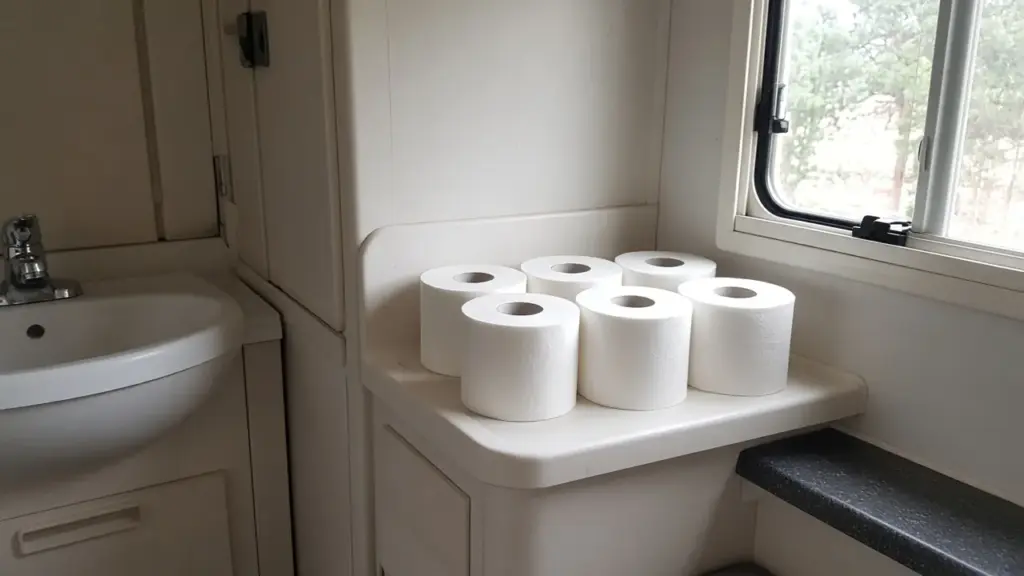
Use RV or septic-safe toilet paper that breaks down quickly. A simple test: place a few squares in a jar of water, shake, and see how quickly it breaks apart. Septic-safe paper dissolves readily.
Choose Septic-Safe Tank Treatments
Tank treatments can help control odors and break down waste. Choose products labeled safe for septic systems. Avoid treatments with formaldehyde or harsh chemicals that may harm septic bacteria.
Use Enough Water
Water helps waste move and break down. Use plenty of water when flushing, and keep your black tank valve closed until the tank is mostly full. Our post on sewer hose setup for a long-term RV site explains tank habits in detail.
Cleaning Products
Choose cleaning products that are septic-safe when possible. Many household cleaners are fine in normal amounts, but heavy use of bleach or antibacterial cleaners can harm bacteria. Read labels and use products sparingly.
Laundry and Septic
Laundry adds water and detergent to septic systems. Use the park laundry according to posted rules. At our park, the laundry room has two washers and two dryers in an air-conditioned, cedar-paneled room. Use appropriate detergents and avoid overloading machines.
Vehicle Washing and Runoff
Soapy runoff from washing vehicles can affect septic systems and drain fields. At Magnolia’s Finest, vehicle washing is not allowed. Our post on keeping work trucks and tools within RV park rules covers vehicle-related rules.
Pet Waste
Do not flush dog waste bags or cat litter. Bag pet waste and dispose of it in the trash. Our posts on pets cover cleanup in more detail.
Signs of a Problem
Watch for:
- Slow draining sinks or toilets
- Gurgling sounds
- Sewage odors inside or outside
- Tank sensors that stay full after dumping
If you notice a problem with the park’s sewer connection, report it to management right away. Do not attempt to repair park infrastructure. Tampering with hookups is not allowed at our park.
Full Hookups and Septic
Whether your site has full hookups or partial hookups, septic-safe habits apply. Our post on full hookup vs. partial hookup RV sites explains the differences. At our park, utilities are confirmed per site.
Electrical and Plumbing Together
Plumbing and electrical systems often work together, such as your water heater and water pump. Managing your electrical load helps keep systems running. Our post on managing electrical load in an RV offers tips.
Teach Everyone in the RV
Make sure everyone in your household and any guests know the rules. A small sign near the toilet listing what not to flush can help. Guests may not be familiar with RV or septic systems.
Set Up a Trash System
Having an easy place to throw things away makes septic-safe habits easier:
- A small lidded trash can in the bathroom
- A grease container in the kitchen
- A sink strainer to catch food scraps
- Bags for pet waste
Why It Matters for the Whole Park
A septic failure can mean backups, odors, and costly repairs that affect every resident. In a small park, everyone shares the same system. Following septic-safe habits protects your neighbors and keeps the park running smoothly.
Storing Supplies in a Small Space
Keeping septic-safe supplies on hand is easier when you have a system. Buy RV toilet paper in bulk and store extra rolls in a dry cabinet or basement bay. Keep tank treatments in a sealed container away from food. Store disposable gloves near your sewer kit. When supplies run low, add them to your shopping list right away so you never have to substitute regular products that could cause problems.
Traveling Away From the Park
If you take trips in your RV, follow the rules of wherever you dump. Some dump stations and campgrounds are on municipal sewer, while others use septic. Septic-safe habits are good practice everywhere and protect your own tanks too.
Water Conservation Helps the System
Septic systems and drain fields can only handle so much water at once. Heavy water use, such as long showers back to back or running several loads of laundry in a row, can overload the system and push solids toward the drain field. Spread out water-heavy tasks, fix leaky faucets and running toilets promptly, and take reasonably short showers. During very rainy periods, when the ground is already saturated, conserving water is especially helpful. These habits also mean less frequent tank dumping and lower wear on your own plumbing.
Medications and Chemicals
Unused medications should never be flushed. Many pharmacies and community programs offer safe disposal options. Likewise, automotive fluids, paint, and solvents should go to proper disposal sites, not drains.
Frequently Asked Questions
Are flushable wipes safe for RV septic systems?
No. Flushable wipes do not break down like toilet paper and are a common cause of clogs.
Is Magnolia’s Finest on a septic system?
Yes. Only septic-safe products should be used in toilets and drains.
Can I pour cooking grease down my RV sink?
No. Grease hardens in pipes and tanks. Wipe pans and throw grease in the trash.
What should I do if my drains are slow?
Check your tanks and hose for clogs. If the park’s sewer connection seems affected, contact management.
Protect the Park Together
Magnolia’s Finest RV Park is a small, gated long-term community where residents care for shared systems. Explore our amenities, read the FAQ, or check availability.
Check Availability or call or text (281) 205-1959
Magnolia’s Finest RV Park · 32020 Old Hempstead Rd, Magnolia, TX 77355 · Contact us