
Downsizing a House Into an RV: A Room-by-Room Approach
December 16, 2025 · By Magnolia RV Park
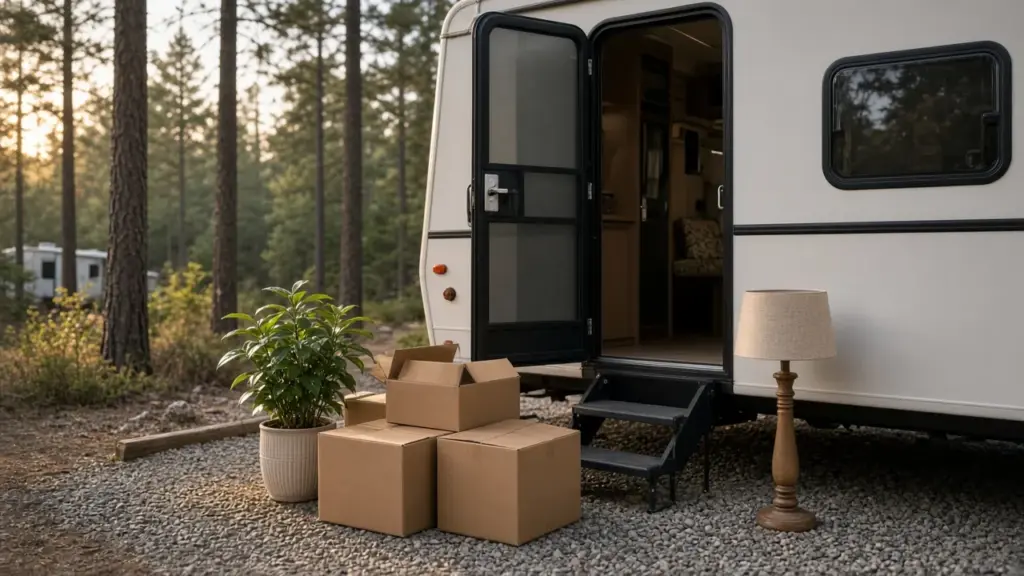
Downsizing an entire house into an RV can feel overwhelming. Closets, cabinets, garages, and attics hold years of belongings, and deciding what to keep can take much longer than expected. Breaking the job into rooms makes it manageable. You finish one space, see real progress, and move on.
This guide walks through a room-by-room approach to downsizing a house into an RV for long-term living. It pairs well with our post on what to leave behind when moving into an RV long-term, which focuses on categories of belongings. For the big picture, see our complete guide to monthly RV living.
Before You Start: Set a Timeline
Downsizing usually takes longer than people expect. Set a timeline working backward from your move-in date:
- Several months out: start with storage areas and rarely used rooms.
- A few months out: work through main living areas.
- Final weeks: handle the kitchen, bedroom, and bathroom, which you use daily.
- Final days: pack what is going into the RV.
Build in extra time for selling items, donation pickups, and unexpected sentimental decisions.
Know Your RV’s Real Space
Before sorting, measure your RV’s storage: cabinets, closets, drawers, under-bed storage, and exterior bays. Take photos. Knowing exactly how much space you have makes decisions easier. Also know your park’s rules. At many long-term parks, including ours, items cannot be stored on or under the site, so everything must fit inside the RV or your vehicles.
Room One: Garage and Storage Areas
Start here because these areas usually hold the most items you do not use.
- Keep: a compact RV tool kit, basic maintenance supplies, and a few essential tools.
- Sell or donate: lawn equipment, large power tools, workbenches, extra ladders, and sports gear you rarely use.
- Consider storage for: valuable or sentimental items you truly plan to use again.
At our park, the park handles lawn care, and extensive mechanic work is not allowed, so mowers and large automotive tools are not needed.
Room Two: Attic, Basement, and Closets Full of “Someday” Items
These spaces often hold holiday decorations, old paperwork, and keepsakes.
- Digitize photos and documents.
- Choose a few favorite decorations and let the rest go.
- Shred old paperwork you no longer need, keeping important documents in a waterproof folder.
- Pick meaningful keepsakes that fit in one small box.
Room Three: Living Room
- Furniture: your RV likely comes furnished. Sell or donate most household furniture.
- Electronics: keep your TV if you use it and a few devices. Sell extras.
- Books and media: switch to digital where possible and keep a small shelf of favorites.
- Decor: choose a few lightweight pieces that can be secured.
Room Four: Home Office
- Keep: laptop, chargers, a compact printer if you need one, and essential supplies.
- Digitize files and store them securely in the cloud.
- Sell or donate: large desks, filing cabinets, and extra office equipment.
If you work remotely, plan a compact workspace in your RV and protect electronics with surge protection.
Room Five: Dining Room
- Keep: a small set of dishes and glasses for daily use.
- Store or pass down: heirloom dishes and formal sets.
- Sell or donate: large serving pieces, extra tablecloths, and decor.
Room Six: Kitchen
Tackle the kitchen near the end, since you still need to eat.
- Keep: a few nesting pots and pans, one good knife set, a cutting board, basic utensils, and a small set of storage containers.
- Keep appliances you use constantly, such as a coffee maker, and consider how much power they draw.
- Sell or donate: duplicate gadgets, rarely used appliances, and extra bakeware.
- Use up pantry items in the weeks before moving.
Room Seven: Bedrooms
- Clothing: build a capsule wardrobe for the season, plus a few layers and work clothes.
- Bedding: bring two sets of sheets sized for your RV mattress.
- Guest room: sell or donate the furniture and contents, since RV guest space is minimal.
Southeast Texas has long, hot summers and occasional cold snaps, so plan clothing accordingly.
Room Eight: Bathrooms
- Keep: daily toiletries, a small first aid kit, and a few towels.
- Discard: expired products and duplicates.
- Choose septic-safe products if your park uses a septic system; ours does.
Room Nine: Laundry Room
- Sell or donate: the washer and dryer if your RV lacks hookups or space.
- Keep: a compact laundry bag and supplies.
At our park, residents have access to two washers and two dryers in an air-conditioned laundry room.
Room Ten: Outdoor Spaces
- Sell or donate: patio furniture, grills that need permanent outdoor spots, planters, and yard decor.
- Keep: a few small outdoor items only if the park allows them.
At our park, furniture, umbrellas, clotheslines, tents, and similar items are not allowed on or under the site.
Dealing With Sentimental Items
Sentimental items are often the hardest. Give yourself permission to keep a small collection that truly matters. Take photos of items you let go. Offer heirlooms to family members. Remember that the memories stay with you even when the objects do not.
Selling, Donating, and Storing
- Sell higher-value items early, since selling takes time.
- Donate usable items that do not sell.
- Store only what you are confident you will use again, keeping in mind that storage units are a recurring cost.
Moving In and Adjusting
Once you move into your RV, expect to adjust. Our post on setting up an RV site for a months-long stay covers organizing the interior. After a few weeks, you may find you brought too much or too little. That is normal. Our post comparing monthly and nightly RV park stays explains why long-term living changes what you need.
Security for What You Keep
When most of your belongings live in one RV, security matters. Lock the RV and vehicles, keep valuables out of sight, and keep an inventory with photos for insurance. Our post on what a security gate does and doesn’t do explains how park features and personal habits work together.
Avoiding Downsizing Burnout
Downsizing a house is physically and emotionally tiring. Work in focused sessions of a few hours rather than marathon weekends. Celebrate finishing each room. Ask friends or family to help with heavy lifting or to keep you company during sentimental sorting. Take breaks when decisions start to feel impossible, and come back with fresh eyes. The goal is steady progress, not perfection.
Frequently Asked Questions
How long does it take to downsize a house into an RV?
It varies, but many people need several months. Start with storage areas early and finish with daily-use rooms.
Which room should I downsize first?
The garage and storage areas, since they usually hold the most items you do not use regularly.
Should I keep my washer and dryer?
Usually not, unless your RV has space and hookups. Many parks, including ours, offer on-site laundry.
What if I bring too much into the RV?
Adjust after a few weeks of living in the RV. Sell, donate, or store what you do not use.
Start Your Next Chapter
Magnolia’s Finest is a small, gated long-term park in Magnolia, TX, with covered sites, cement pads, and on-site laundry. Visit our sites and rates page and learn about long-term RV living in Magnolia.
Check Availability or call or text (281) 205-1959
Magnolia’s Finest RV Park · 32020 Old Hempstead Rd, Magnolia, TX 77355 · Contact us