
RV Electrical Adapters: Dogbones and Safe Use
December 11, 2025 · By Magnolia RV Park
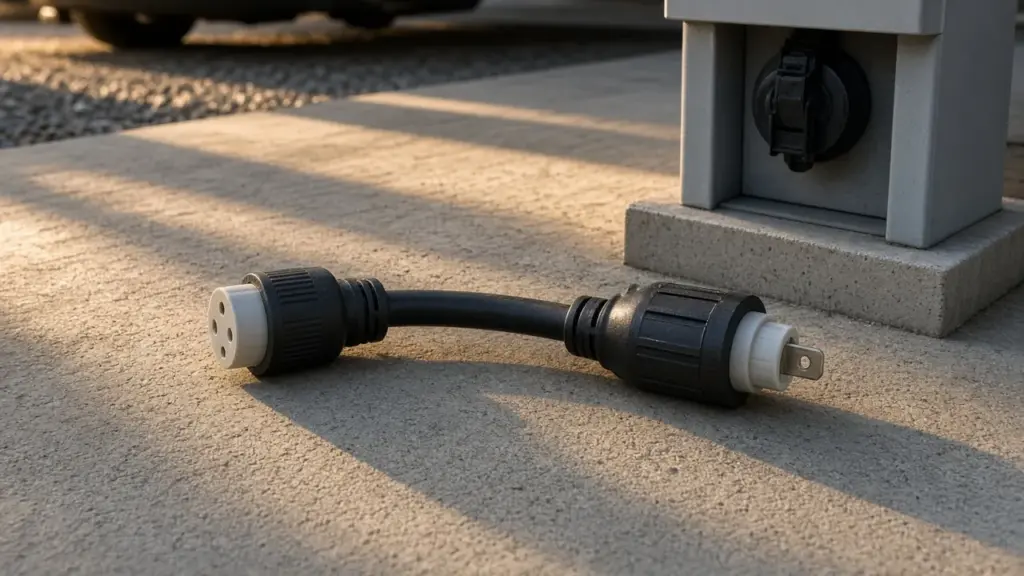
If you have spent time around RVs, you have probably seen a “dogbone”: a short, chunky adapter that lets an RV plug into an outlet it was not designed for. Adapters are common and useful, but they are also misunderstood. Using them incorrectly can overheat connections, trip breakers, or damage equipment.
This guide explains what RV electrical adapters do, when they make sense, the risks, and how to use them safely. It is general information, not electrical advice. For electrical questions, consult park management or a qualified RV technician or electrician. For an overview of site connections, see our pillar on RV hookups for long stays.
What RV Adapters Do
RV adapters let a plug of one type connect to a receptacle of another type. Common examples include:
- 50-amp RV plug to 30-amp receptacle
- 30-amp RV plug to 50-amp receptacle
- 30-amp RV plug to a standard household-style receptacle
A “dogbone” is simply an adapter with a short cord between the two ends, which reduces strain on the pedestal outlet compared with a rigid adapter.
The Most Important Rule: Adapters Don’t Add Power
An adapter changes the shape of the connection. It does not change the amount of power available. If you plug a 50-amp RV into a 30-amp receptacle, you have only 30-amp service. If you plug into a standard household-style outlet, you have far less.
That means you need to reduce your load when using a “step-down” adapter. Running an air conditioner, microwave, and water heater at once may be fine on 50-amp service but can quickly trip a breaker or overheat connections on 30-amp. Our post on 30-amp vs. 50-amp RV service explains the difference, and our post on managing electrical load offers practical ways to stay within limits.
Step-Down Adapters: 50 to 30
A 50-amp RV plugged into a 30-amp receptacle is a common scenario. It works, but:
- Your available power is limited to the 30-amp receptacle
- Heavy appliances need to be staggered
- Running two air conditioners may not be possible
- An energy management system in your RV may help shed loads
Step-Up Adapters: 30 to 50
A 30-amp RV can plug into a 50-amp receptacle using an adapter. This is generally used when a 30-amp receptacle is not available or is not working. The RV still operates as a 30-amp system; it does not gain extra capacity.
Household-Style Adapters
Adapters that let an RV plug into a standard household-style outlet are typically meant for light use, such as keeping batteries charged or running a few lights. They are not suitable for running air conditioners or other heavy loads for long periods. Using them for heavy loads can overheat outlets and cords.
Risks of Using Adapters Incorrectly
- Overheating when loads exceed what the connection can handle
- Loose connections that arc and generate heat
- Damaged pedestal outlets from heavy rigid adapters pulling on receptacles
- Moisture intrusion at connection points
- Cheap or damaged adapters with poor internal connections
Warning signs include warm or hot plugs, discoloration, melted plastic, burning smells, and flickering power. If you notice any of these, reduce load immediately and investigate.
Choosing Quality Adapters
- Buy adapters rated for the amperage you will use
- Choose models with sturdy construction and good strain relief
- Prefer dogbone styles over heavy rigid adapters
- Look for adapters with handles that make unplugging easier and safer
Replace adapters that are cracked, discolored, or loose.
Safe Connection Habits
- Turn off major loads inside the RV before connecting or disconnecting.
- Turn off the pedestal breaker before plugging in or unplugging.
- Connect your surge protector or electrical management system first where appropriate.
- Plug in firmly and fully.
- Turn on the pedestal breaker, then add loads one at a time.
- Check connections after running loads for a while, feeling for unusual warmth.
Our post on using a surge protector at a long-term RV site explains how protective devices fit into this process.
Keep Adapters Dry and Supported
Keep connections off the ground and out of standing water when possible. Support adapters and cords so their weight does not pull on the pedestal outlet. In heavy rain or storms, avoid handling electrical connections.
Adapters Are Not a Workaround for Park Rules
Adapters should only be used to connect your RV to your own site’s pedestal. Never use adapters to connect to another site’s pedestal or a building outlet without permission. At our park, running cords from other sites and tampering with electrical hookups are not allowed. Our post on why running cords between RV sites is a bad idea explains the risks.
Report Pedestal Problems
If your site’s pedestal receptacle is damaged, loose, or not working, do not force an adapter into it or try to repair it. Report it to management. Our Residents page includes a maintenance request form.
Long-Term Use Considerations
At a long-term site, your connection may stay plugged in for months. That makes regular inspection more important. Check your adapter and plugs periodically, especially during hot summers when air conditioners run constantly. Heat and continuous load can reveal weak connections over time.
Adapters and Other Utilities
While electrical adapters get most of the attention, water and sewer connections also use fittings and adapters. Use drinking-water-safe hoses and fittings for fresh water, and secure sewer fittings to prevent leaks. Good habits across all connections reduce problems. For more on keeping your systems healthy, see our guide to RV water heater maintenance.
Building an Electrical Kit
A small, organized electrical kit makes connecting safely easier. Many full-timers keep a surge protector or electrical management system, a quality dogbone adapter in each direction they might need, a heavy-duty RV extension cord rated for their amperage, a non-contact voltage tester, electrical tape for labeling only, and work gloves. Store everything in a dry bin inside the RV or a storage bay. Label adapters clearly so you can grab the right one without guessing, and inspect the whole kit a few times a year.
Common Adapter Mistakes
Even experienced RVers make adapter mistakes now and then. The most common include chaining several adapters together to reach an outlet, leaving a heavy rigid adapter hanging from a pedestal receptacle for months, forgetting to reduce loads after stepping down from 50 to 30 amps, and continuing to use an adapter with a cracked housing or discolored prongs. Another frequent mistake is plugging or unplugging while the air conditioner is running, which can cause arcing that damages both the adapter and the receptacle. Avoiding these habits goes a long way toward a safe, reliable connection.
Frequently Asked Questions
What is a dogbone adapter?
A short cord adapter that lets an RV plug connect to a different receptacle type while reducing strain on the pedestal outlet.
Does a 30-to-50-amp adapter give my RV more power?
No. Adapters change the connection shape only. A 30-amp RV still operates as 30 amps.
Can I run my AC on a household-style outlet adapter?
Generally not for extended periods. Household-style adapters are typically meant for light loads.
What should I do if my adapter feels hot?
Reduce electrical load immediately, turn off the pedestal breaker, and inspect the adapter and receptacle. Replace damaged adapters and report pedestal issues.
Ask About Your Site’s Electric Service
Electric service at Magnolia’s Finest is confirmed per site. Ask about your RV’s needs before moving in, and see our FAQ page and amenities for more.
Check Availability or call or text (281) 205-1959
Magnolia’s Finest RV Park · 32020 Old Hempstead Rd, Magnolia, TX 77355 · Contact us