
RV Tire Care When You’re Parked for Months
November 22, 2025 · By Magnolia RV Park
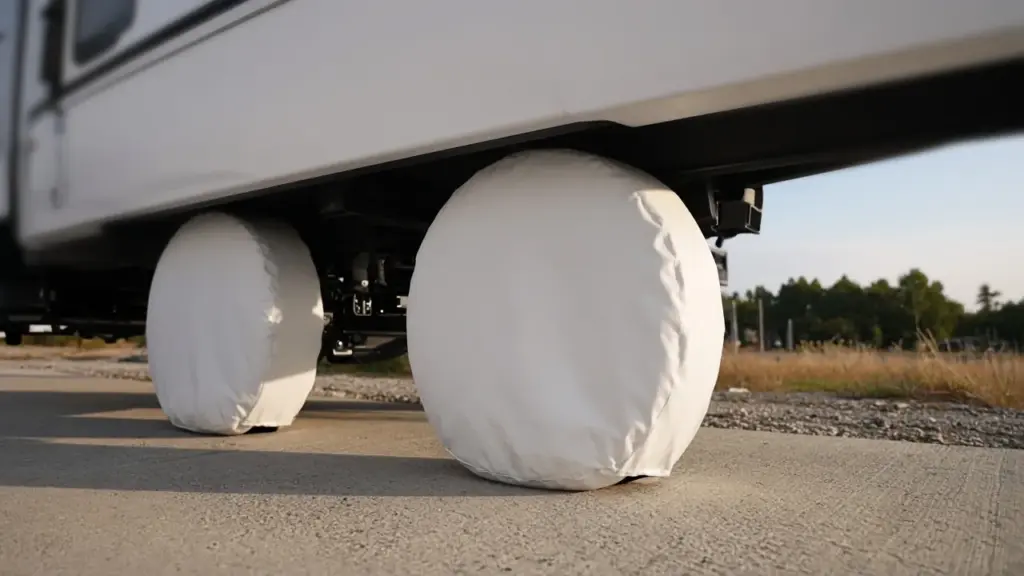
When your RV sits on one site for months, it is easy to forget about the tires. They are not rolling, so they must be fine, right? In reality, tires can deteriorate while parked. Sun, heat, time, and weight all take a toll. Many RV tires age out long before the tread wears down.
This guide explains how to care for RV tires during a long stay, so they are safe and ready when it is time to move. It is general information. Follow your tire manufacturer’s recommendations and consult a qualified tire professional with questions. For a complete maintenance calendar, see our pillar on RV maintenance for full-time residents.
Why Parked Tires Still Need Care
Tires are made of rubber compounds that contain chemicals to protect against aging. When a tire rolls, those compounds are worked through the rubber. When a tire sits, protection can decrease, and the rubber can dry out and crack. Common problems for parked tires include:
- UV damage from direct sunlight
- Heat from Texas summers and hot pavement
- Dry rot, visible as cracks in the sidewall or between tread blocks
- Flat spots from sitting in one position for a long time
- Slow pressure loss
- Age-related weakening regardless of tread depth
A tire that looks fine at a glance can still be unsafe after years of sitting.
Know Your Tires’ Age
Every tire has a date code on the sidewall. It is part of the DOT code and usually shows the week and year of manufacture as four digits. For example, a code ending in “2324” would indicate the 23rd week of 2024.
Many tire and RV manufacturers recommend inspecting and considering replacement of RV tires at certain ages, regardless of tread. Check your tire manufacturer’s guidance and ask a tire professional for advice about your specific tires.
Keep a record of your tire ages in your maintenance log.
Protect Tires From the Sun
UV rays are one of the biggest threats to parked tires. Options include:
- Covered sites, which shade the RV and can reduce direct sun on tires depending on the angle of the sun
- Tire covers, where park rules allow
- Parking orientation, if you have a choice, to reduce afternoon sun exposure
Check your park’s rules before using tire covers. At our park, tarps and covers are not permitted on RVs, so ask management if you have questions about tire protection. Eight of our ten sites are covered.
Check Pressure Regularly
Tires lose pressure over time, even when parked. Underinflated tires are more prone to damage and flat spots.
- Check pressure regularly with a quality gauge
- Check when tires are cool, such as early morning
- Inflate to the pressure recommended by the RV or tire manufacturer for your load
- Look for tires that lose pressure faster than the others, which may indicate a problem
A tire pressure monitoring system can help, especially when you are preparing to move.
Inspect for Damage
During regular maintenance checks, look at each tire:
- Sidewall cracks or crazing
- Bulges or bubbles
- Cuts or punctures
- Uneven tread wear
- Exposed cords
If you find any of these, consult a tire professional before moving the RV.
Keep Tires Clean
Dirt and grime can hold moisture and chemicals against the rubber. Some cleaners and tire shine products can also damage rubber. Use products recommended by the tire manufacturer. Keep in mind that vehicle washing is not allowed at some parks, including ours, so plan tire cleaning accordingly, such as spot cleaning with a damp cloth or handling it off site.
Reduce Weight on Tires
Weight on tires for long periods can contribute to flat spots and stress. Some RVers reduce weight on tires during long stays:
- Leveling and stabilizing correctly, following manufacturer guidance
- Avoiding overloading the RV with unnecessary items
- Keeping tanks at reasonable levels
Do not use stabilizers to lift the RV off its tires unless the manufacturer specifically designs them for that purpose. Improper lifting can damage the frame.
Moving the RV Periodically
Some owners roll their RV slightly now and then to change the contact patch and reduce flat spots. This is not always practical at long-term sites, and moving may require disconnecting utilities and re-leveling. If you are considering it, check with management first and follow park rules.
Preparing Tires Before a Move
Before moving your RV after a long stay:
- Check tire age and condition.
- Inspect for cracks, bulges, and damage.
- Inflate to the correct pressure when cool.
- Check lug nuts for proper torque.
- Inspect the spare tire.
- Consider professional inspection if tires are older or show any signs of damage.
Tire failure on the highway can cause serious damage to your RV and put you and others at risk. A few minutes of inspection is worth it.
Tires and Your Budget
Tire replacement is a real cost of RV ownership, and it often arrives all at once when multiple tires age out together. Plan for it in your maintenance fund. Setting aside a small amount each month makes the eventual replacement far less painful. Our post on managing electrical load in an RV covers another system worth budgeting and planning for.
Tires and Vehicles
Do not forget your tow vehicle or daily driver. At our park, each site allows up to two registered, running vehicles. Keep vehicle tires maintained so you are ready for work and errands. Remember that extensive mechanic work is not allowed at our park, so plan tire changes and repairs at a shop.
Adding Tires to Your Maintenance Routine
Include tire care in your regular checks alongside the roof, AC, and seals:
- Monthly: check pressure and visually inspect
- Seasonally: look closely for cracks and review tire age
- Before any move: full inspection and pressure check
Our RV roof inspection checklist, guide to resealing roof seams, and guide to AC filter and coil cleaning cover the other parts of a regular routine.
Texas Heat and Tires
Southeast Texas summers are long and hot. Concrete and asphalt can get very hot in the afternoon sun, which adds heat stress to tires. Covered sites help by shading the RV for much of the day. Checking pressure in the cool early morning gives the most accurate readings. During summer, pay extra attention to sidewall cracking, which can appear faster in intense heat. If your RV has been parked through several Texas summers, a professional tire inspection before your next move is a smart investment.
Frequently Asked Questions
Do RV tires go bad if the RV is parked?
Yes, they can. Sun, heat, time, and weight can cause dry rot, cracking, and weakening even without driving.
How do I tell how old my RV tires are?
Look for the four-digit date code at the end of the DOT code on the sidewall, showing the week and year of manufacture.
Can I use tire covers at a long-term RV park?
Check the park’s rules. At our park, tarps and covers are not permitted on RVs, so ask management about tire protection.
What should I do before moving my RV after a long stay?
Check tire age, condition, pressure, and lug nuts, inspect the spare, and consider a professional inspection for older tires.
Covered Sites Help Protect Your Rig
Magnolia’s Finest offers eight covered sites and two uncovered sites on cement pads in Magnolia, TX. Explore our amenities and review our park rules.
Check Availability or call or text (281) 205-1959
Magnolia’s Finest RV Park · 32020 Old Hempstead Rd, Magnolia, TX 77355 · Contact us