
Severe Thunderstorms and RVs: Wind, Hail, and Lightning
November 21, 2025 · By Magnolia RV Park
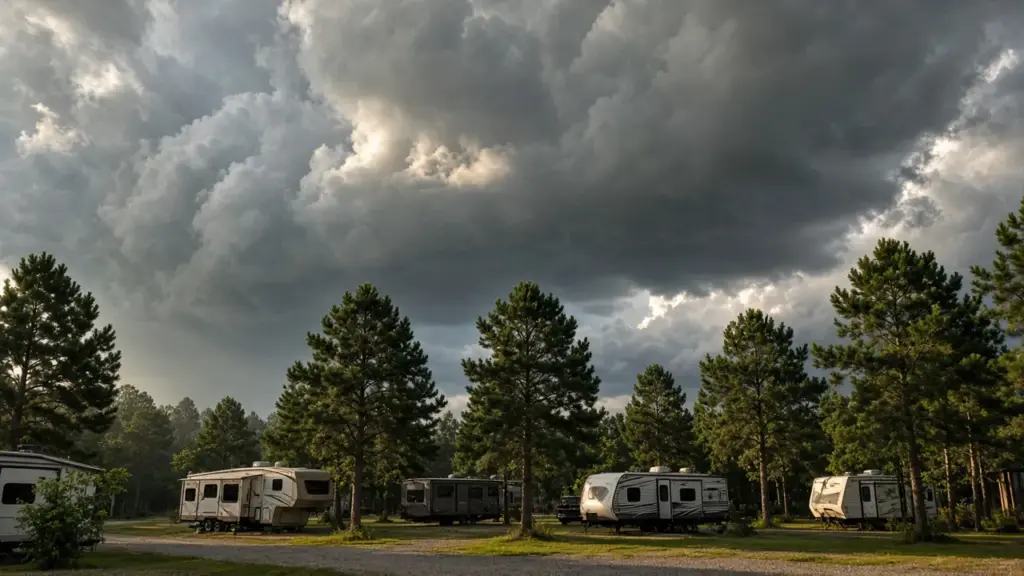
Hurricanes get the headlines, but in Southeast Texas, severe thunderstorms are a far more frequent threat. Spring and summer storms can bring damaging wind, hail, frequent lightning, and sudden heavy rain. For full-time RVers, knowing how to prepare and when to take shelter is part of everyday safety.
This guide explains the main thunderstorm hazards for RVs and practical ways to prepare. It is general information. Always follow guidance from the National Weather Service and local officials. For weather across the year, see our pillar on Texas weather and your RV.
Why Thunderstorms Matter for RVers
RVs are lighter and less protected than site-built homes. That makes them more vulnerable to:
- Strong straight-line winds that can rock the RV, damage awnings, and drop tree limbs
- Hail that can dent, crack, or puncture roofs, vents, skylights, and windows
- Lightning that can cause power surges and damage electronics
- Heavy rain and flash flooding that can make roads dangerous
- Tornadoes, which occasionally form in severe storms
Understanding these hazards helps you decide what to do before and during a storm.
Stay Informed
The first step in thunderstorm safety is knowing what is coming:
- Weather apps with alerts for your location
- Wireless Emergency Alerts on your phone
- A weather radio with battery backup
- Local news during active weather
Learn the difference between a watch, which means conditions are favorable for severe weather, and a warning, which means severe weather is occurring or imminent. When a warning is issued for your area, act on your plan.
Know Where You Would Shelter
An RV is not a safe place to be during a tornado or extreme winds. Before storm season, identify a sturdy building where you could go if a tornado warning is issued or extreme winds are forecast. Ask park management whether there is a designated shelter option, and if not, identify nearby public buildings or a friend’s home.
If you cannot reach a sturdy building in time, follow official safety guidance for your situation.
Preparing for Wind
Wind is one of the most common sources of RV damage. Prepare by:
- Retracting awnings whenever you leave the RV and whenever storms are forecast
- Securing loose items allowed outside the RV
- Closing and latching storage bays
- Considering retracting slides in very high winds, following manufacturer guidance
- Keeping stabilizers deployed properly
At our park, items are not allowed on or under the site, and tarps and covers are not permitted on RVs, which reduces loose items that can blow around during storms.
Preparing for Hail
Hail can cause expensive damage quickly. You cannot always prevent it, but you can reduce risk:
- Covered sites provide overhead protection. At our park, eight of ten sites are covered.
- Move vehicles under cover if safe and permitted.
- Close blinds and shades to reduce risk from broken glass.
- Check insurance coverage for hail damage before storm season.
After a hailstorm, inspect the roof, vents, skylights, and air conditioner shrouds for cracks or punctures.
Preparing for Lightning
Lightning can strike far from the storm itself. It also causes power surges that can damage RV electronics. Reduce risk by:
- Using a surge protector or electrical management system at the pedestal
- Unplugging sensitive electronics during nearby lightning if practical
- Staying inside during lightning rather than working outdoors
- Avoiding connecting or disconnecting shore power during a storm
Preparing for Heavy Rain and Flooding
Heavy downpours can cause flash flooding on roads. Remember:
- Do not drive through flooded roads. Water can be deeper and faster than it looks.
- Check drainage around your RV after storms.
- Inspect roof seals regularly to prevent leaks.
Our post on getting your RV site ready before hurricane season covers roof and seal preparation that also helps during thunderstorms.
Power Outages
Thunderstorms often cause power outages. Plan ahead:
- Keep flashlights and batteries handy
- Charge phones and power banks when storms are forecast
- Keep the refrigerator closed during outages
- Know how you will stay cool if the outage lasts into hot weather
When power returns, surges can occur. Your surge protector helps. Our post on reducing RV air conditioner strain covers how to help your AC recover after outages.
Pets During Storms
Many pets are frightened by thunder. Keep pets inside, give them a quiet, comfortable spot, and keep leashes and carriers ready in case you need to move to shelter. The park is not responsible for pets left in the RV, so plan for their safety if you are away when storms arrive.
After the Storm
When the storm has passed and it is safe:
- Look for hazards such as downed power lines, fallen limbs, and standing water.
- Inspect the roof for hail damage or debris.
- Check slides, awnings, and seals.
- Look inside for leaks or water stains.
- Check electrical connections for damage.
- Photograph damage for insurance.
- Report park issues to management; our Residents page includes a maintenance request form.
Our post on RV air conditioner filter and coil cleaning also explains how to check your AC unit on the roof, which can be damaged by hail and debris.
Building Storm Habits
Thunderstorms can develop quickly on hot afternoons. Good daily habits help:
- Retract awnings when you leave
- Keep your phone charged
- Check the forecast each morning during storm season
- Keep a small storm kit ready: flashlight, batteries, radio, water, first aid, and important documents
Planning Around Work Schedules
Many residents work away from the park during the day. If storms are forecast, retract awnings and secure the RV before you leave in the morning. Arrange a neighbor or friend to check on pets if needed. Knowing your RV is already prepared lets you focus on staying safe wherever you are.
Talking With Neighbors
In a small park, neighbors can help each other during storm season. Share phone numbers with the residents next to you, and let each other know if you will be away during forecast storms. A quick text asking a neighbor to check whether your awning is retracted, or letting them know a limb has fallen near their site, can prevent damage. Always leave repairs to park property to management, and report issues through the park’s usual process.
Insurance Before the Season
Before spring storms begin, review your RV insurance. Ask your agent whether your policy covers hail, wind, falling trees, and water intrusion, and what your deductible is for storm damage. Long-term parks commonly require coverage; ours asks residents to carry liability and property insurance at state minimum levels. Keep your policy number and claims phone number in your phone and in your document folder, so you can report damage quickly after a storm.
Frequently Asked Questions
Is it safe to stay in an RV during a thunderstorm?
For typical storms, many RVers stay inside. For tornado warnings or extreme winds, move to a sturdy building if possible.
How can I protect my RV from hail?
Covered sites offer overhead protection, and moving vehicles under cover helps when safe and permitted. Check insurance coverage and inspect the roof after hail.
Should I unplug my RV during lightning?
Use a surge protector, and unplug sensitive electronics during nearby lightning if practical. Avoid handling shore power connections during a storm.
What should I check after a storm?
Look for hazards, inspect the roof, slides, awnings, seals, interior, and electrical connections, and photograph any damage.
Covered Sites for Texas Weather
Magnolia’s Finest offers eight covered sites on cement pads in a small gated park in Magnolia, TX. Explore our amenities and our FAQ page to learn more.
Check Availability or call or text (281) 205-1959
Magnolia’s Finest RV Park · 32020 Old Hempstead Rd, Magnolia, TX 77355 · Contact us