
Linemen and Storm Crews: Finding RV Sites During Deployments
November 20, 2025 · By Magnolia RV Park
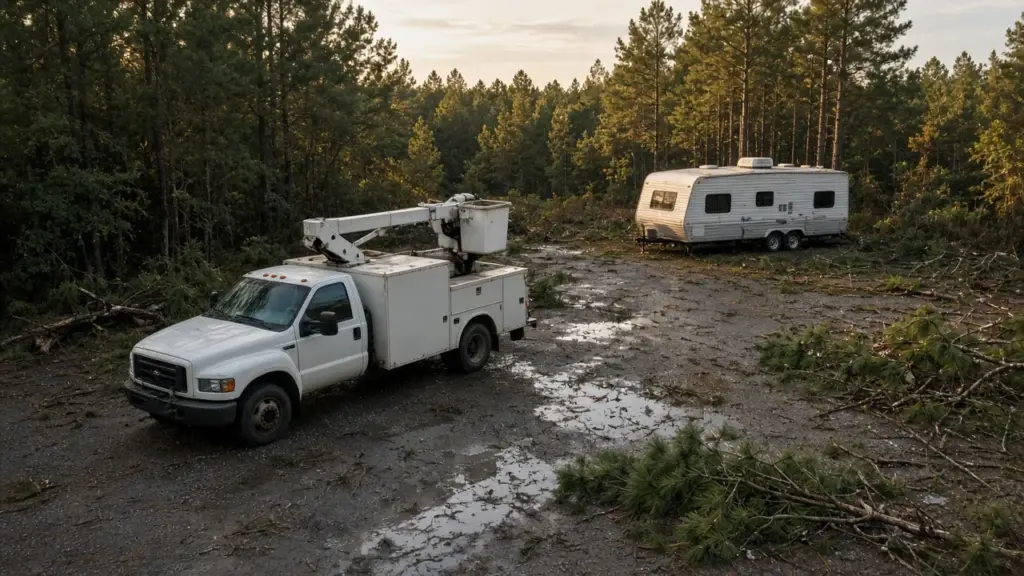
When storms knock out power across a region, linemen and utility crews arrive to rebuild. Many travel with RVs so they have a reliable place to rest between long shifts. Finding an RV site during a deployment can be challenging, especially when demand spikes after a major storm.
This guide covers how linemen and storm crews can approach finding RV sites, what to ask parks, and when a long-term park is a better fit than a short-term option. For a broader look at workforce housing, see our pillar on RV living for workers and contractors.
Understanding Deployment Types
Lineworker assignments come in different shapes:
- Emergency storm deployments, which may last days to a few weeks
- Extended restoration work, which can stretch longer after major events
- Planned construction or maintenance projects, such as new lines or system upgrades, which may last months
The type of work affects what kind of RV park fits. Short emergency deployments often call for parks that accept nightly or weekly stays. Longer projects may fit long-term parks.
A Note About Long-Term-Only Parks
Some parks, including ours, are long-term only and do not accept overnight or short-term guests. If you are on a brief emergency deployment, a long-term-only park will likely not fit. If you are working a longer project north of Houston, a long-term park may offer the quiet and stability you need. Our post on why some RV parks don’t take overnight guests explains how these parks work.
Why Rest Matters So Much
Line work is demanding and dangerous. Long hours, heat, and physically intense work require real recovery. When choosing a park, prioritize:
- Quiet hours that are enforced
- Low traffic through the park
- Long-term neighbors rather than constant turnover
- A gated entrance
At our park, quiet hours run from 8 p.m. to 8 a.m., the entrance is gated, and residents are long-term.
Searching for Sites During High Demand
After a major storm, RV parks near affected areas can fill quickly with crews, displaced residents, and other workers. Tips for finding a site:
- Call parks directly. Availability changes quickly and may not be reflected online.
- Look a little farther out. A park a bit outside the hardest-hit area may have openings and may have power restored sooner.
- Coordinate with your employer. Some utilities and contractors help arrange housing.
- Be ready to apply quickly. Have your RV, vehicle, and ID details ready.
Questions to Ask Parks
Before committing, ask:
- Is power currently available at the park?
- What is the minimum stay?
- How many vehicles are allowed?
- Are bucket trucks or large work vehicles allowed?
- Can trailers or equipment be stored on site?
- What are the quiet hours?
- How much notice is needed to leave?
At our park, each site allows up to two registered, running vehicles, and trailers and equipment cannot be stored on the site. Large work vehicles should be discussed before applying.
Electrical Considerations
Ironically, storm crews sometimes arrive at parks with limited power. Once connected, protect your RV with a surge protector or electrical management system, since grid restoration can cause fluctuations. Manage your load carefully. Our post on managing electrical load in an RV explains how to avoid tripped breakers.
Crew Sharing and Occupancy
Crews sometimes want to share RVs or sites. Many parks limit occupancy. At our park, the maximum is two people per site, everyone must be on file, and subletting is not allowed. Each RV needs its own site and application.
Keeping Gear Organized
Line work involves heavy gear: climbing equipment, boots, flame-resistant clothing, and personal protective equipment. Keep gear organized:
- Store PPE and climbing gear securely in your truck or RV
- Keep a dedicated area for wet or muddy gear
- Wash work clothing according to its care instructions
Our park has two washers and two dryers in an air-conditioned laundry room.
Handling Irregular Schedules
Storm work often means unpredictable hours. You may work through the night or be called out suddenly. Plan for:
- Blackout curtains for daytime sleep
- Quick-to-prepare meals
- A go-bag with essentials
- Pet care arrangements if you travel with pets
The park is not responsible for pets left in the RV, so make sure pets are safe and cared for during long shifts. Our post on travel nurses and medical staff living in RVs has more ideas for managing irregular schedules.
Longer Projects North of Houston
Not all lineworker jobs are storm-driven. Planned transmission and distribution projects in fast-growing areas north of Houston can last months. For these, a long-term park can offer stability. Our posts on construction crews and RV living and energy and pipeline workers cover similar considerations.
Applying to a Long-Term Park
Long-term parks usually require an application, background check, and deposit. At our park, RVs must be fully self-contained, in good condition, and 15 years or newer. The background check fee is $49, and the security deposit is $125. RVs should arrive before 6 p.m., and arrival notes are sent by text.
Staying Safe in Hurricane Season
Hurricane season runs from June 1 through November 30. Crews working in the region during storm season should keep a personal plan for their RV, even while focused on restoring power for others.
Taking Care of Yourself
Storm work can be physically and mentally exhausting. Long hours, time away from family, and difficult conditions add up. Try to protect a few basics: eat real meals when you can, drink plenty of water in the heat, and take advantage of rest time rather than filling it with chores. Stay in touch with family by phone or video when schedules allow. A clean, organized RV where you can shower, eat, and sleep without clutter makes a real difference over a long assignment.
Preparing Your RV Between Assignments
Between deployments, use the downtime to get your RV ready for the next call. Check tires, batteries, and roof seals, restock your go-bag, and replace anything that wore out on the last job. Clean air conditioner filters, since your rig may be parked in heat for long stretches. Keep important documents, including RV registration, insurance cards, and your employer’s contact information, in one easy-to-grab folder. When the next call comes, a ready RV means you can focus on the work instead of scrambling to fix problems on the road.
Frequently Asked Questions
Can linemen stay at long-term RV parks?
Yes, if the assignment fits the park’s minimum stay. Long-term-only parks will not fit short emergency deployments but may fit longer projects.
How can storm crews find RV sites after a major storm?
Call parks directly, look a little outside the hardest-hit area, coordinate with your employer, and be ready to apply quickly.
Can I park a bucket truck at an RV park?
Ask the park before applying. Many parks have vehicle limits and restrictions on large work vehicles.
Can crew members share one RV site?
Only within occupancy limits. At our park, the maximum is two people per site.
A Stable Base for Longer Projects
Magnolia’s Finest is a small, gated, long-term park in Magnolia, TX. If you are working a longer project north of Houston, learn more about long-term RV living in Magnolia.
Check Availability or call or text (281) 205-1959
Magnolia’s Finest RV Park · 32020 Old Hempstead Rd, Magnolia, TX 77355 · Contact us