
Using a Surge Protector at a Long-Term RV Site
November 1, 2025 · By Magnolia RV Park
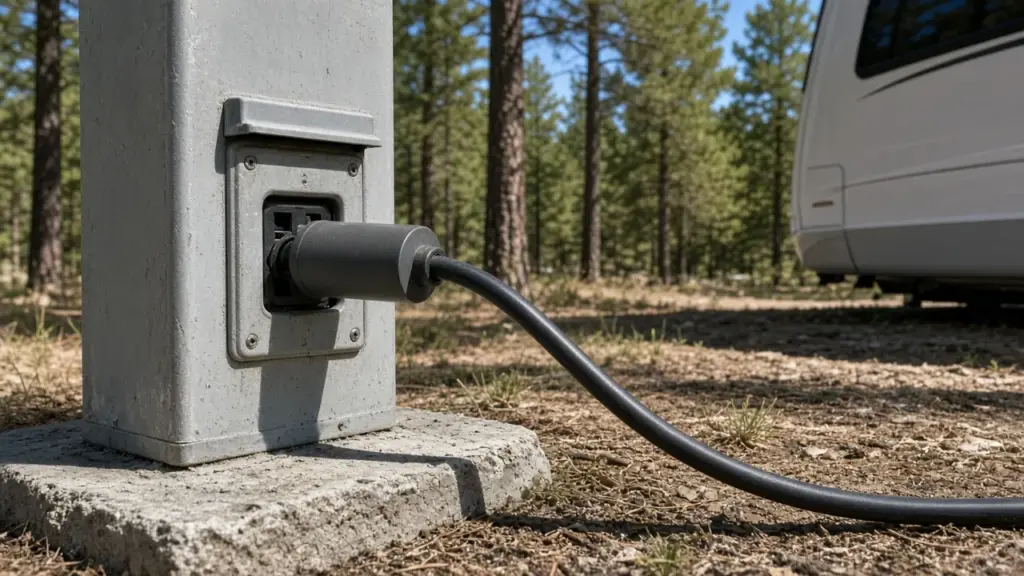
When you live in an RV full time, the electrical connection at your site powers almost everything: air conditioning, refrigerator, lights, water heater, electronics, and the chargers that keep your batteries healthy. A single power problem can damage expensive components. That is why many full-time RVers consider a surge protector essential equipment rather than an optional accessory.
This guide explains what surge protectors do, how they differ from full electrical management systems, and how to use one well at a long-term site. It is general information, not electrical advice. For anything beyond plugging in a device, consult a qualified RV technician or electrician. For a broader look at site connections, see our pillar on RV hookups for long stays.
What Can Go Wrong With Power
RV electrical systems can be affected by several kinds of problems:
- Surges and spikes. Sudden increases in voltage, often from lightning or grid switching.
- Low voltage. Voltage that drops below normal, which can strain air conditioners and other motors.
- High voltage. Voltage that runs above normal and can damage electronics.
- Miswiring. Reversed polarity or open grounds at a pedestal.
- Power restoration. Spikes when power returns after an outage.
In Texas, summer thunderstorms and tropical weather make lightning and outages a real part of life. In hot weather, heavy air conditioner use across a region can also affect voltage.
Surge Protector vs. Electrical Management System
There are two main categories of protective devices:
Basic surge protectors absorb or divert voltage spikes up to a rated limit. Many also show indicator lights for wiring problems at the pedestal. They are typically less expensive, but some types stop protecting after absorbing a large surge.
Electrical management systems (EMS) do more. In addition to surge protection, they monitor voltage and frequency continuously and cut power to the RV if conditions become unsafe, such as low or high voltage or miswiring. Once conditions return to normal, they restore power after a short delay. Some models display readings or connect to a phone app.
For full-time residents, many RVers prefer an EMS because it protects against ongoing voltage problems, not just sudden spikes. The right choice depends on your RV, budget, and preferences.
Matching the Device to Your RV
Protective devices are sold for 30-amp and 50-amp service. Your device must match your RV’s electrical system. Our post on 30-amp vs. 50-amp RV service explains the difference and how it affects daily use.
When shopping, compare:
- Amp rating: 30 or 50
- Surge rating, usually measured in joules
- Whether it monitors voltage and cuts power
- Whether it detects miswiring
- Display or app features
- Portable or hardwired installation
- Weather resistance
Portable vs. Hardwired
Portable units plug into the pedestal, and your RV cord plugs into the unit. They are easy to install and move with you, but they are exposed to weather and, at some locations, theft. Many owners use a lock to secure portable units.
Hardwired units are installed inside the RV, usually near the electrical panel or transfer switch. They are protected from weather and theft and always in place. Installation generally involves electrical work and is often done by a qualified technician.
For long-term residents, either can work. Some people prefer hardwired units because the RV stays in one place and the device is protected year-round.
Installing a Portable Unit Safely
If you use a portable unit, a safe process usually looks like this:
- Turn off major loads inside the RV, such as air conditioners and the water heater.
- Turn off the breaker at the pedestal.
- Plug the protector into the pedestal outlet.
- Plug your RV cord into the protector.
- Turn the pedestal breaker back on.
- Check the protector’s indicator lights or display for errors.
- Once everything reads normal, turn on your loads one at a time.
Never plug or unplug under load, and never use damaged cords or adapters. If the protector reports a wiring problem at the pedestal, do not bypass it. Report it to park management.
Good Electrical Habits
A surge protector works best alongside good habits:
- Stagger large loads. Avoid running air conditioners, microwaves, water heaters, and hair dryers all at once.
- Inspect cords regularly. Look for damaged insulation, discolored plugs, or loose connections.
- Keep connections dry. Route cords to avoid standing water.
- Watch for warm plugs. A plug that feels hot is a sign of trouble.
- Unplug during severe storms if advised. Some owners disconnect during nearby lightning.
Our post on getting your RV site ready before hurricane season covers power outage planning in more depth.
Respecting Park Electrical Rules
At a long-term park, the pedestal and the park’s wiring belong to the park. At our park, tampering with electrical hookups is not allowed, and residents may not run cords from other sites. If you notice a problem with a pedestal, such as a tripped breaker that will not reset or a damaged outlet, report it through the park’s usual maintenance process instead of attempting repairs. Our park’s Residents page includes a maintenance request form.
Many parks also prohibit certain appliances that draw heavy power or create hazards. At ours, window air conditioning units and space heaters are not permitted.
Protecting Your Electronics Inside
A pedestal protector guards the RV’s main connection, but you can add a second layer inside:
- Plug computers and TVs into quality point-of-use surge strips
- Use battery backup units for sensitive work equipment
- Keep important files backed up to the cloud
This matters especially for residents who work remotely from their RV.
Roof and Weather Considerations
Water and electricity are a dangerous mix. Keep cords and protectors off wet ground when possible, and inspect your RV for leaks around roof-mounted equipment. Our guide to resealing RV roof seams and edges explains how to keep water out of the areas around air conditioners and vents.
Summer Readiness
Texas summers put electrical systems under steady load. Before the hottest months, check your cords, protector, and air conditioner performance. Our guide on preparing your RV for Texas summer includes electrical checks as part of seasonal preparation.
When to Call a Professional
Call a qualified RV technician or electrician if you notice:
- Repeated shutdowns from your EMS
- Burning smells or scorch marks
- Flickering lights or intermittent power
- A breaker in the RV that trips frequently
Report any issue with the park’s pedestal to management right away.
Frequently Asked Questions
Do I really need a surge protector for a long-term RV site?
Many full-time RVers consider one essential because it protects expensive components from spikes, voltage problems, and miswiring.
What is the difference between a surge protector and an EMS?
A basic surge protector absorbs spikes. An electrical management system also monitors voltage and cuts power when conditions become unsafe.
Should I choose a portable or hardwired unit?
Both can work. Hardwired units are protected from weather and theft, while portable units are easy to move and install.
What should I do if my protector shows a pedestal wiring problem?
Do not bypass it. Leave the RV unplugged from that connection and report the problem to park management.
Ask About Site Details Before You Move In
Electric service at Magnolia’s Finest is confirmed per site, so ask us about your RV’s needs before you move in. We are a small, gated long-term park with covered sites and cement pads. Our FAQ page answers many common questions.
Check Availability or call or text (281) 205-1959
Magnolia’s Finest RV Park · 32020 Old Hempstead Rd, Magnolia, TX 77355 · Contact us