
How to Tour an RV Park Before You Commit
October 26, 2025 · By Magnolia RV Park
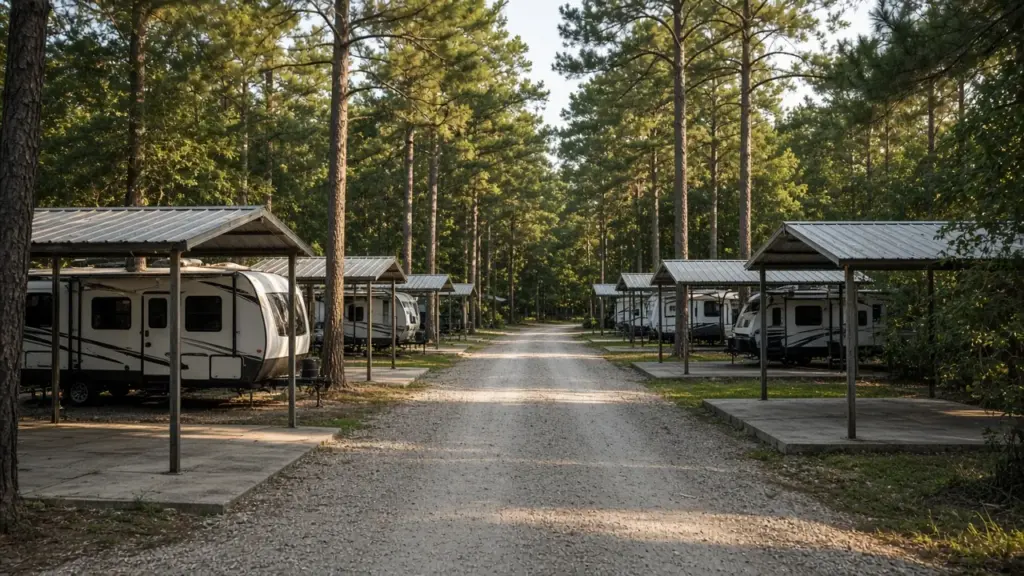
Photos can make almost any RV park look good. A tour tells you what it is actually like to live there. If you are planning to stay for months, spending an hour walking a park before you apply is one of the best investments you can make.
This guide explains how to plan a tour, what to look at, what to listen for, and what to ask while you are there. If a tour is not possible, we also cover how to gather the same information remotely.
Why a Tour Matters for Long Stays
For a weekend trip, a slightly noisy park or a muddy site is a minor annoyance. For a monthly stay, those details become part of daily life. A tour helps you answer questions that no website can:
- Does the park feel calm and well cared for?
- Are the sites easy to live on?
- What is the traffic and noise like?
- Would you feel comfortable coming home here after work?
It also gives you a chance to meet management, which matters a lot at a small park where you will deal directly with the people who run it. Our guide to small RV parks vs. big RV resorts explains why management style is so important.
Plan Your Visit
Contact the park before showing up. Many long-term parks, especially gated ones, do not allow drop-in visitors because they protect residents’ privacy and security. Asking ahead shows respect and gives management time to answer your questions.
Try to visit at a time that resembles when you will be home. If you work days, an evening visit shows you what the park is like when residents are back. If you work nights, a daytime visit tells you about daytime noise.
Bring a list of questions. Our post on questions to ask before signing up for a monthly RV site is a good starting point.
First Impressions at the Entrance
Start noticing things before you even park.
- The approach. Is the road to the park easy to drive with an RV? Are there tight turns or low branches?
- The entrance. Is it gated? Is it clean and well lit?
- Signage and rules. Are expectations clearly communicated?
A gated entrance adds a layer of privacy and discourages random traffic. At our park, the entrance has a security gate, and residents receive gate information at move-in.
Look Closely at the Sites
The site is where you will live, so spend the most time here.
Pad surface
Concrete pads make leveling easier and keep mud and dust down. Gravel can shift and rut, and grass can turn soft after heavy rain. Look at how sites hold up, especially if it has rained recently.
Cover and shade
Overhead cover or shade makes a big difference in a Texas summer. It keeps sun off your roof and reduces the load on your air conditioner.
Spacing and layout
Notice how close sites are to each other, where vehicles park, and how easy it would be to back in or pull through with your RV.
Hookups
Look at the utility pedestals. Are they in good condition? Ask what electric service, water, and sewer the specific site provides, and whether internet is available.
At our park, all ten sites are cement pads and eight are covered. We confirm hookups and maximum RV size for the specific pad before anything is reserved. You can see site types on our Sites & Rates page.
Judge the Upkeep
The condition of a park tells you a lot about how it is managed.
- Is the grass mowed and the landscaping tidy?
- Are common areas clean?
- Are there abandoned vehicles or piles of clutter at sites?
- Do residents’ RVs look well kept?
A park where residents keep their sites tidy usually has clear rules and consistent management. Clutter, junk, and neglected rigs are warning signs.
Listen and Watch
Stand still for a few minutes and pay attention.
- What do you hear? Highway noise, barking, generators, music?
- How much traffic moves through the park?
- Are people arriving and leaving frequently?
A small long-term park with settled residents is generally quieter than a campground with nightly turnover.
Check the Amenities You Will Use
Skip the brochure list and focus on what you will actually use weekly. For most long-term residents, that means laundry, trash disposal, and a safe place to walk a dog.
If there is a laundry room, look inside. Is it clean? Are machines in working order? Our park has two washers and two dryers in an air-conditioned, cedar-paneled room. You can see the rest of our list on the amenities page.
Talk With Management
Use your tour to understand how the park is run.
- How do residents contact management, and how quickly do they get responses?
- How are maintenance requests handled?
- What are the most important rules?
- What is the application process, including screening?
Ask how background checks work and what the standards are. Our post on how RV park background checks work explains the typical process. At our park, we state our standards up front so no one pays a screening fee without knowing them.
Drive the Surrounding Area
A tour should include the area around the park. Drive to the nearest grocery store, fuel station, and pharmacy. If you know where you will work, drive that route too, ideally at the time you would commute. If you are considering our park, our post on moving to Magnolia, TX with an RV helps you plan the move itself.
If You Cannot Tour in Person
Sometimes a tour is not practical, especially if you are relocating from far away. In that case:
- Ask for recent photos of the specific site
- Ask detailed questions by phone or text
- Request a copy of the park rules
- Look at the park’s online gallery
- Ask about the surrounding area and commute routes
A park that answers questions clearly and honestly is usually a good sign.
Red Flags to Notice
- Management that avoids direct answers about utilities, costs, or rules
- Sites with standing water or deep ruts
- Neglected or abandoned RVs
- Overflowing trash
- No clear process for applications or maintenance
Frequently Asked Questions
Can I drop by an RV park to look around?
Call first. Many long-term parks, especially gated ones, do not allow drop-in visitors to protect residents’ privacy.
What should I look at first on an RV park tour?
Start with the site: its surface, cover, spacing, and hookups. Then look at upkeep, noise, and the amenities you will actually use.
When is the best time to tour an RV park?
Visit at a time that matches when you will be home, such as evenings if you work days, so you see the park at its most typical.
What if I cannot tour before moving?
Ask for site photos, request the park rules, and ask detailed questions by phone or text.
See If Our Park Fits
Magnolia’s Finest is a small, gated, long-term park with eight covered sites, cement pads throughout, and an air-conditioned laundry room. Reach out before visiting, and tell us your dates and your RV so we can talk about what may be available.
Check Availability or call or text (281) 205-1959
Magnolia’s Finest RV Park · 32020 Old Hempstead Rd, Magnolia, TX 77355 · Contact us