RV Toilet and Valve Maintenance
September 23, 2026 · By Magnolia RV Park
Your RV toilet and tank valves are some of the hardest-working parts of your rig. When you live in an RV full time, they get used every day, and a small problem can quickly become unpleasant. Regular maintenance keeps everything working smoothly, prevents odors, and helps you avoid messy repairs.
This guide covers the basics of RV toilet and valve maintenance for long-term residents. For a complete maintenance calendar, see our pillar, RV Maintenance for Full-Time Residents: The Complete Schedule.
How Your RV Toilet System Works
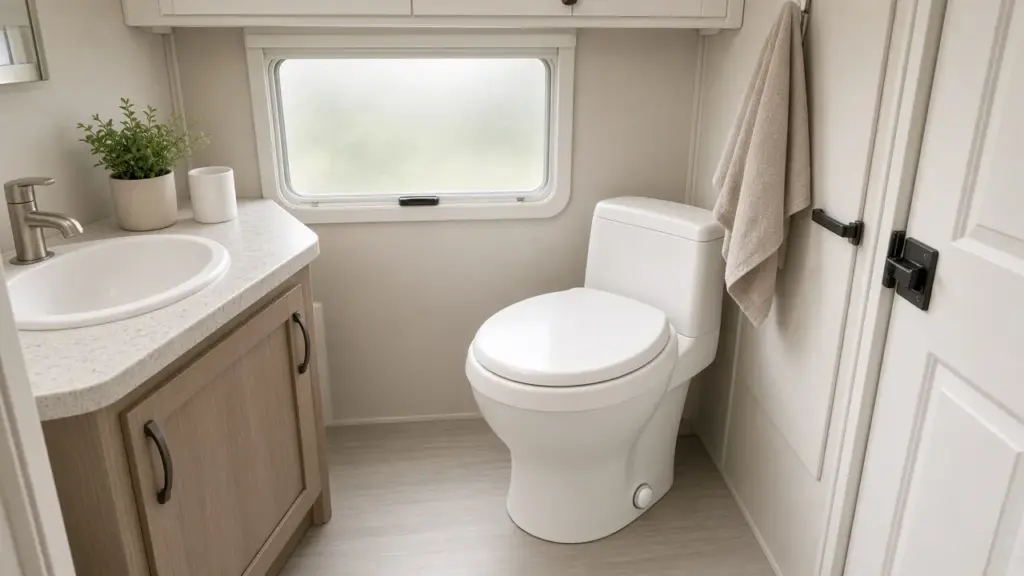
Most RV toilets use a foot pedal or hand lever to open a valve at the bottom of the bowl. Waste drops into the black tank below. When it is time to empty, you open the black tank valve and waste flows through the sewer hose into the sewer connection.
The system includes several key parts:
- The toilet bowl and flush valve
- The seal that keeps odors out of the RV
- The black tank
- The gray tank for sink and shower water
- Tank valves that control draining
- The sewer hose and fittings
Septic-Safe Products Matter
Our park uses a septic system, so only septic-safe products should be used. This protects the park’s system and your RV’s tanks.
- Use toilet paper labeled RV-safe or septic-safe, which breaks down quickly.
- Choose tank treatments that are septic-safe.
- Never flush wipes, even those labeled flushable, paper towels, feminine products, or other items.
- Avoid harsh chemicals that can harm septic systems.
Flushing the wrong items can clog your tank and cause problems for the park’s system, which affects everyone. Review the park rules for guidance.
Toilet Maintenance
Keep the Seal Healthy
The rubber seal at the bottom of the bowl keeps odors from rising out of the black tank. Over time, it can dry out or crack. Keep a small amount of water in the bowl to help keep the seal moist. Some RVers use a seal conditioner made for RV toilets. If you notice odors or water draining out of the bowl, the seal may need replacement.
Clean Gently
Use cleaners made for RV toilets, and avoid abrasive products or harsh chemicals that can damage seals and plastic parts. Wipe down the bowl and around the base regularly.
Use Enough Water
Using enough water when flushing helps waste move into the tank and prevents buildup. A dry black tank can lead to clogs and odors.
Check for Leaks
Look around the base of the toilet and the water line connection for leaks. A small leak can damage flooring over time. Our post on caring for RV flooring and upholstery explains how to protect floors from moisture.
Tank Valve Maintenance
How Valves Work
Most RVs use gate valves, operated by pull handles, to open and close the black and gray tanks. Over time, these valves can become stiff, sticky, or leaky.
Keep Valves Closed Until Draining
For long-term hookups, a common practice is to keep the black tank valve closed until the tank is at least two-thirds full, then drain it. This allows enough liquid to flush solids out. Leaving the black valve open can let liquids drain while solids build up, a problem often called a pyramid.
Drain Black First, Then Gray
Drain the black tank first, then the gray tank. The gray water helps rinse the sewer hose.
Lubricate Valves
If valves become stiff, a valve lubricant made for RV tanks can help. Some tank treatments also include lubricants.
Watch for Leaks
If you notice dripping from the sewer outlet with valves closed, a valve seal may be worn. Replacing a valve is a manageable repair for many RVers, or you can have a technician handle it.
Sewer Hose Care
Inspect your sewer hose regularly for cracks, holes, or loose fittings. Keep it properly supported so waste flows downhill. Replace a worn hose before it fails. Never tamper with the park’s sewer connection or any other hookups, since hookup tampering is not allowed at our park.
Preventing Odors
Odors usually come from a dry seal, a tank that needs cleaning, or a vent problem.
- Keep water in the toilet bowl.
- Use septic-safe tank treatments.
- Clean tanks regularly.
- Make sure roof vents are clear.
Tank Sensors
Tank sensors often give false readings because of buildup on the tank walls. Regular tank flushing can help. Learn to estimate tank levels based on usage, too.
Monthly Checks
Add toilet and valve checks to your routine. Our post on a monthly RV maintenance checklist offers a full list of tasks. Include:
- Inspecting the toilet seal
- Checking for leaks around the toilet
- Testing tank valves
- Inspecting the sewer hose
- Cleaning tanks
Tools and Supplies
Keep a small kit on hand with gloves, a flashlight, RV-safe cleaners, valve lubricant, and basic tools. Our post on RV cabinet, drawer, and door hardware fixes covers building a basic toolkit that can also help with plumbing repairs.
Storage Reminder
Keep maintenance supplies inside your RV or in storage compartments, not on or under the site. Our post on outdoor living on a small RV pad explains how to keep your site clear.
When to Call for Help
Some repairs, like replacing a toilet or a stuck valve deep in the system, may be easier with a professional RV technician. If you notice a problem with the park’s sewer connection itself, contact management right away. Texting (281) 205-1959 is preferred, and the Residents page has a maintenance request form.
Hygiene and Safety
Always wear gloves when handling sewer connections and wash your hands thoroughly afterward. Keep a dedicated set of tools for sewer work and clean them after each use. Store your sewer hose and fittings separately from your fresh water hose to avoid contamination.
Cold Weather Considerations
Southeast Texas winters are usually mild, but occasional freezes do happen. When temperatures drop below freezing, protect your sewer hose and valves from ice, and make sure tanks do not freeze. Draining tanks before a freeze can help.
Planning for Long-Term Use
Full-time use puts more wear on your toilet system than weekend camping. Replace seals and hoses as they wear, keep up with tank cleaning, and budget for occasional repairs. Consistent care keeps your RV comfortable and helps protect the park’s septic system.
Keeping a Maintenance Log
Write down when you replace seals, lubricate valves, or clean tanks. A simple log in a notebook or phone app helps you spot patterns, such as a valve that needs attention every few months, and makes it easier to plan replacements before something fails.
Frequently Asked Questions
What kind of toilet paper should I use in my RV?
Use RV-safe or septic-safe toilet paper that breaks down quickly. Our park uses a septic system, so only septic-safe products should be used.
Should I leave my black tank valve open?
Generally, no. Keep it closed until the tank is at least two-thirds full, then drain it to help flush out solids.
Why does my RV bathroom smell?
Odors often come from a dry toilet seal, a tank that needs cleaning, or a blocked vent.
Can I flush wipes in my RV toilet?
No. Even wipes labeled flushable can clog tanks and harm septic systems.
Keep Your Home Running Smoothly
Review our park rules, explore our amenities, or check availability.
Check Availability or call or text (281) 205-1959
Magnolia’s Finest RV Park · 32020 Old Hempstead Rd, Magnolia, TX 77355 · Contact us