
Caring for RV Flooring and Upholstery in Daily Use
September 2, 2026 · By Magnolia RV Park
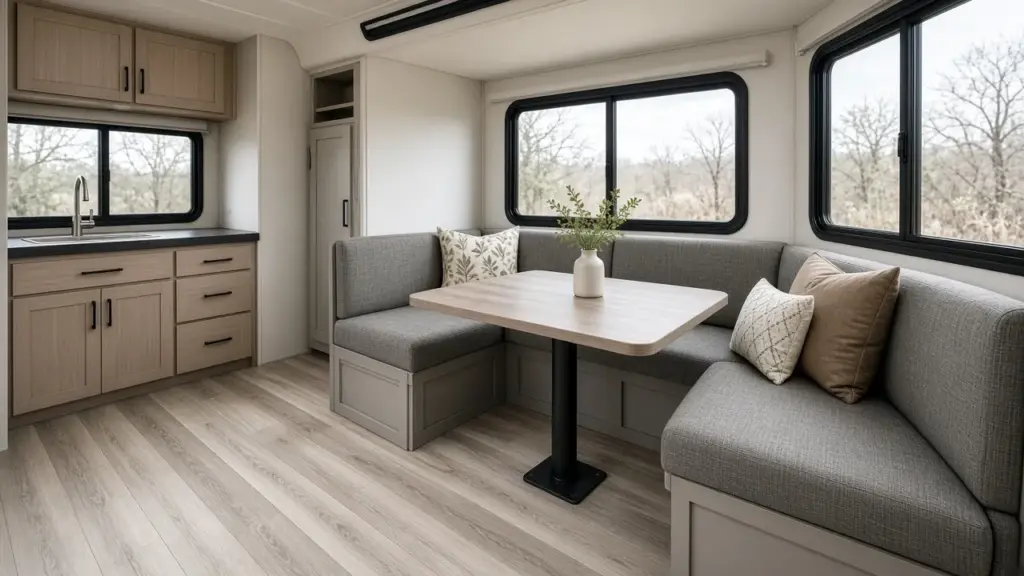
When you live in an RV full-time, your floors and furniture get far more use than they would on weekend trips. Foot traffic, pets, spills, sun, and humidity all take a toll. Because RV materials are often lighter than those in houses, they can wear out faster without care. A few simple habits help your flooring and upholstery last longer and keep your home looking good.
This guide covers practical care for RV flooring and upholstery in daily use. For a complete maintenance routine, see our pillar, RV Maintenance for Full-Time Residents: The Complete Schedule.
Common RV Flooring Types
Most RVs have one or more of these flooring types:
- Vinyl or linoleum. Common in kitchens and bathrooms. Durable and water-resistant.
- Vinyl plank or laminate-style flooring. Popular in newer RVs for its wood look.
- Carpet. Found in some bedrooms and living areas, especially in older models.
Each type needs slightly different care.
Daily Habits to Protect Floors
- Take off shoes at the door. This reduces dirt, grit, and wear.
- Use door mats. Place mats outside and inside the entry to catch dirt.
- Sweep or vacuum often. Grit acts like sandpaper on floors.
- Wipe spills promptly. Prevent stains and water damage.
In pine country, needles and sandy soil can be tracked in easily. A good entry mat makes a big difference.
Cleaning Vinyl and Vinyl Plank Floors
- Sweep or vacuum first
- Use a damp mop with a cleaner recommended for your flooring
- Avoid soaking the floor, since water can seep into seams
- Avoid harsh chemicals that can damage the finish
Caring for Carpet
- Vacuum regularly
- Spot clean stains quickly
- Consider periodic deep cleaning
- Use area rugs in high-traffic zones
Carpet can trap moisture and odors in humid climates. Keep humidity under control; our post on choosing and using a dehumidifier in an RV explains how.
Watching for Soft Spots
While cleaning, pay attention to how your floor feels. Soft or spongy areas may indicate water damage in the subfloor. Check near the bathroom, kitchen, and entry doors. Include floor checks in your monthly routine; our post on a monthly RV maintenance checklist covers other items.
Protecting Floors From Furniture
RV furniture often has small feet that can dent or scratch floors. Use felt pads under chairs and tables. Lift rather than drag furniture when moving it.
Common RV Upholstery Types
- Fabric. Comfortable but can stain and absorb odors.
- Faux leather or vinyl. Easy to wipe clean but can crack or peel over time, especially with sun exposure.
- Real leather. Found in some higher-end RVs. Needs conditioning.
Caring for Upholstery
- Vacuum fabric upholstery regularly
- Spot clean spills right away with an appropriate cleaner
- Wipe faux leather with a damp cloth and mild soap
- Condition real leather as recommended
- Use washable covers or throws on high-use furniture
Sun Protection
Texas sun can fade fabrics and crack faux leather. Close blinds or use shades during the hottest part of the day. Remember that foil on windows is not allowed at our park, so use proper window treatments. Covered sites also help reduce sun exposure.
Pets and Furniture
Pets are hard on floors and furniture. Tips:
- Trim nails regularly to reduce scratches
- Use washable covers on furniture your pets use
- Vacuum pet hair frequently
- Clean accidents with an enzyme cleaner
Humidity and Mildew
Southeast Texas humidity can cause mildew on upholstery and carpet. Keep air circulating, run exhaust fans, and use a dehumidifier.
Pests
Crumbs and food spills attract pests. Clean up after meals and vacuum regularly. Rodents can also damage upholstery and wiring; our post on rodent prevention for parked RVs offers tips.
Outdoor Dirt and the Awning Area
The area near your entry collects dirt. Keep your entry clean and consider shoes-off habits. Our post on awning care covers caring for your RV’s outdoor shade.
Replacing Worn Materials
Eventually, floors and upholstery wear out. Replacing flooring or reupholstering furniture can refresh your RV. For major projects, consider a professional. Remember that extensive work may not be appropriate at your site; ask management before starting big projects.
Choosing Durable Replacements
If you are replacing flooring or upholstery, choose materials suited to full-time RV life. Vinyl plank flooring is popular because it is water-resistant, easy to clean, and durable. For upholstery, performance fabrics and high-quality faux leather resist stains and hold up to daily use. Keep weight in mind, since heavy materials add to your RV’s load. Lighter options designed for RVs are usually the best choice.
A Simple Cleaning Routine
A consistent routine keeps things manageable. Many residents sweep or vacuum daily, wipe down surfaces a few times a week, and do a deeper clean of floors and upholstery once a month. Because RVs are small, cleaning goes quickly, and a little effort each day prevents dirt and wear from building up.
Why RV Materials Need Extra Care
RV interiors are designed to be lightweight, which helps with towing and fuel efficiency but also means materials can be less durable than those in a house. Flooring may be thinner, cushions may use lighter foam, and fabrics may be less resistant to heavy use. When an RV becomes a full-time home, these materials face daily wear that manufacturers may not have fully anticipated for recreational use.
Understanding this helps set realistic expectations. With regular care, most RV interiors hold up well for years. Without care, they can show wear surprisingly quickly. Small habits, like removing shoes and using covers, have an outsized impact on how your RV looks over time.
Temperature Swings
RVs experience bigger temperature swings than most houses, especially when the air conditioner cycles or when the RV sits closed up. These changes can cause flooring to expand and contract and can dry out or crack vinyl and faux leather. Keeping your RV at a steady temperature, using shades to reduce sun exposure, and conditioning leather or vinyl surfaces help reduce stress on materials.
Keeping a Cleaning Kit Handy
Keep a small cleaning kit in an easy-to-reach spot, with a handheld vacuum, microfiber cloths, a gentle floor cleaner, an upholstery spot cleaner, and an enzyme cleaner for pet accidents. Having supplies ready makes it easy to handle spills immediately, which is the best way to prevent permanent stains.
Rugs for Comfort and Protection
Washable area rugs are a simple way to protect high-traffic floors and add warmth underfoot. Choose rugs with non-slip backing so they do not slide on smooth RV floors, and wash them regularly to remove grit. Rugs also make a small space feel more like home.
Frequently Asked Questions
How can I protect my RV floors from wear?
Take off shoes, use mats, sweep often, wipe spills quickly, and use felt pads under furniture.
What causes soft spots in RV floors?
Soft spots usually indicate water damage in the subfloor. Find the source and have it inspected.
Can I use foil on windows to block sun?
No. Foil on windows is not allowed at our park. Use proper shades or curtains.
How do I prevent mildew on upholstery?
Control humidity with ventilation and a dehumidifier, and keep air circulating.
Keep Your Home Comfortable
Review our park rules, explore our amenities, or check availability.
Check Availability or call or text (281) 205-1959
Magnolia’s Finest RV Park · 32020 Old Hempstead Rd, Magnolia, TX 77355 · Contact us