
Managing Condensation Inside a Lived-In RV
May 25, 2026 · By Magnolia RV Park
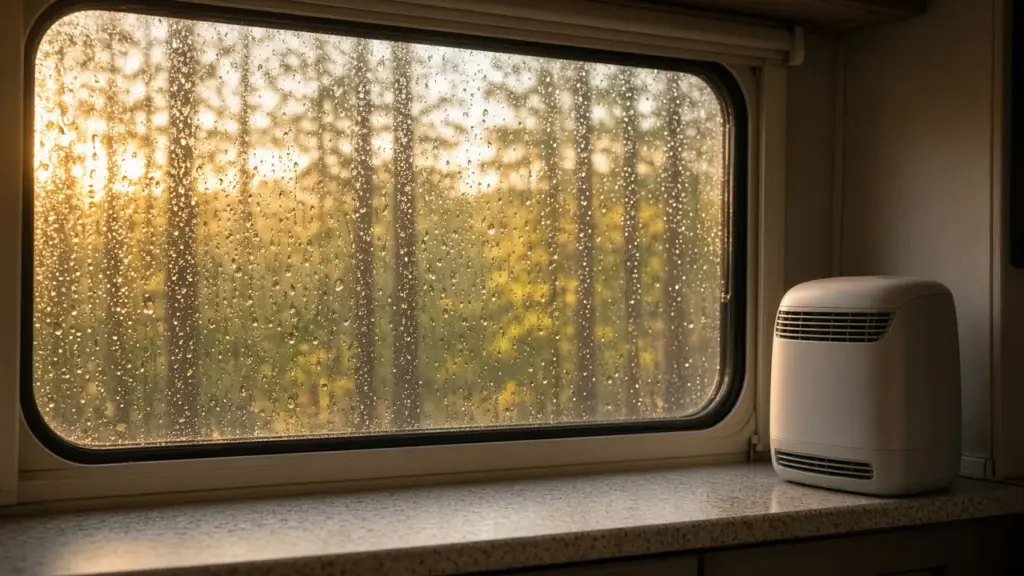
If you wake up to foggy windows, damp window frames, or water droplets on the ceiling near vents, you are dealing with condensation. It is one of the most common problems for people who live in their RVs full time. Unlike a weekend camper, a full-time resident is cooking, showering, breathing, and running appliances in the same small space every day. All of that adds moisture to the air, and in Southeast Texas the outside air is often humid to begin with.
Left unchecked, condensation can lead to mildew, musty smells, stained surfaces, and even hidden water damage. This guide explains why condensation happens and how to manage it in a lived-in RV. For the bigger picture of long stays, see our pillar, Monthly RV Living: The Complete Guide.
Why Condensation Happens
Condensation forms when warm, moist air touches a cooler surface. The air cools, it can no longer hold as much moisture, and water droplets form. In an RV, the coolest surfaces are usually windows, window frames, exterior walls, metal fixtures, and areas near roof vents.
In winter, cold outside temperatures make windows and walls cool, so moisture from inside collects on them. In summer, the opposite can happen: air-conditioned interior surfaces can be cooler than the humid outside air, and moisture can form in places like around vents and ducts.
A small space amplifies the problem. A family of two can add a surprising amount of moisture to the air each day just by breathing, cooking, and showering.
Where Moisture Comes From
Common sources of indoor moisture in an RV include:
- Cooking, especially boiling water and simmering soups
- Showers, which release large amounts of steam
- Breathing, particularly overnight in a closed bedroom
- Drying clothes or towels inside
- Pets, through breathing and water bowls
- Propane appliances, which release moisture as a byproduct of combustion
- Plants, if you keep them inside
Reducing moisture at the source is the most effective way to limit condensation.
Ventilate Every Day
Ventilation removes moist air and replaces it with drier air.
- Run the bathroom fan during and for a while after every shower.
- Use the range hood fan whenever you cook.
- Crack a roof vent or window when weather allows, even slightly, to create air flow.
- Use vent covers that allow roof vents to stay open during rain.
- Keep interior doors open when possible so air circulates throughout the RV.
Even in cooler weather, a little ventilation goes a long way.
Use Your Air Conditioner and Dehumidifier
Air conditioners remove moisture from the air as they cool. In Southeast Texas, running your AC is often your best defense against humidity for much of the year. Keep filters clean so the unit works efficiently.
A small dehumidifier can make a big difference, especially during cooler, damp months when you are not running the AC much. Empty the reservoir regularly or use a model with a drain hose that empties into an appropriate drain.
Moisture absorber products, such as containers of desiccant, are useful in closets, cabinets, and under beds.
Manage Temperature Differences
Reducing temperature differences between surfaces and air can help limit condensation.
- Insulated window coverings reduce how cold or warm window glass gets.
- Reflective shades help in summer.
- Vent insulators reduce heat transfer through roof vents.
Our park does not allow foil on windows, space heaters, or window AC units, so rely on proper coverings and your RV’s built-in systems.
Wipe and Dry Surfaces
When condensation forms, wipe it away promptly. Keep a microfiber cloth or squeegee near windows and wipe them each morning during damp seasons. Pay attention to window tracks and frames, where water can collect and cause mildew.
Check hidden areas regularly:
- Behind cushions and mattresses
- Inside closets and cabinets on exterior walls
- Under the bed
- Around windows and roof vents
Our post on keeping an RV clean when you live in it includes tips for cleaning mildew safely with septic-safe products.
Dry Clothes Outside the RV
Drying laundry inside your RV adds a lot of moisture. Use dryers whenever possible. Our park’s laundry room has two washers and two dryers in an air-conditioned space. Our post on laundry routines for RV residents covers building a simple schedule. Clotheslines are not allowed on or under the site at our park, so the dryer is the best option.
Cook Smart
Cover pots while cooking to reduce steam, use the range hood fan, and consider using a slow cooker or multi-cooker with a sealed lid. Avoid long simmering sessions with the windows closed on cold days.
Mattresses and Bedding
Mattresses on solid platforms can trap moisture underneath, especially when warm bodies lie on them in a cool RV. Consider a mattress underlayment designed to promote air flow beneath the mattress. Lift the mattress periodically to check for dampness and let it air out.
Watch for Signs of Bigger Problems
Condensation is common, but some signs may point to leaks or damage:
- Soft spots in floors, walls, or ceilings
- Persistent stains that return after cleaning
- Musty smells that do not go away
- Delaminating walls
- Water that appears after rain, not after cooking or showering
If you suspect a leak, have it inspected promptly. Water damage in an RV can spread quickly.
Condensation During Construction or Transitions
If you are living in an RV while your house is being built, you may be spending long days away while the RV is closed up. Closed, unventilated spaces can trap moisture. Leaving a vent slightly open and running a dehumidifier can help. Our post on living in an RV while your house is being built covers that situation.
Covered Sites and Moisture
Site conditions affect moisture too. Covered sites shade the roof, which reduces temperature swings and can make the interior easier to keep comfortable. At our park, 8 of 10 sites are covered, and all sites are on cement pads, which stay firmer and drier than dirt or gravel in wet weather. Even so, a covered site does not eliminate indoor moisture, so daily habits still matter.
A Seasonal Approach
Condensation changes with the seasons. In winter, focus on ventilation, insulated window coverings, and wiping windows each morning. In spring and fall, when temperatures are mild but humidity can be high, a dehumidifier often does the most good. In summer, keep the AC running efficiently and watch for moisture around vents and ducts. Adjusting your routine through the year helps you stay ahead of problems.
Build Moisture Habits Into Your Routine
The most effective approach is simple daily habits: run fans, wipe windows, empty the dehumidifier, and check hidden corners once a week. Residents who build these habits rarely deal with serious mildew. Just as clear rules keep a small park running smoothly, as we explain in our post on firm policies in small RV parks, consistent routines keep your RV healthy.
Frequently Asked Questions
Why do my RV windows get wet in the morning?
Warm, moist indoor air condenses on cooler window glass, especially overnight when windows cool down.
How can I reduce condensation in my RV?
Ventilate daily, run your AC or a dehumidifier, use insulated window coverings, wipe surfaces, and avoid drying clothes inside.
Is condensation harmful to my RV?
It can lead to mildew, stains, and water damage if not managed.
Can I use a space heater to dry out my RV?
No. Space heaters are not allowed at our park. Use your RV’s built-in systems, ventilation, and a dehumidifier.
Can I hang laundry outside my RV?
No. Clotheslines are not allowed on or under the site. Use the park’s dryers.
Live Comfortably at Magnolia’s Finest
Magnolia’s Finest RV Park is a small, gated long-term community with mostly covered sites on cement pads. Learn about long-term RV living in Magnolia, view sites and rates, or check availability.
Check Availability or call or text (281) 205-1959
Magnolia’s Finest RV Park · 32020 Old Hempstead Rd, Magnolia, TX 77355 · Contact us