
Corporate Relocation: Using an RV While House Hunting
December 8, 2025 · By Magnolia RV Park
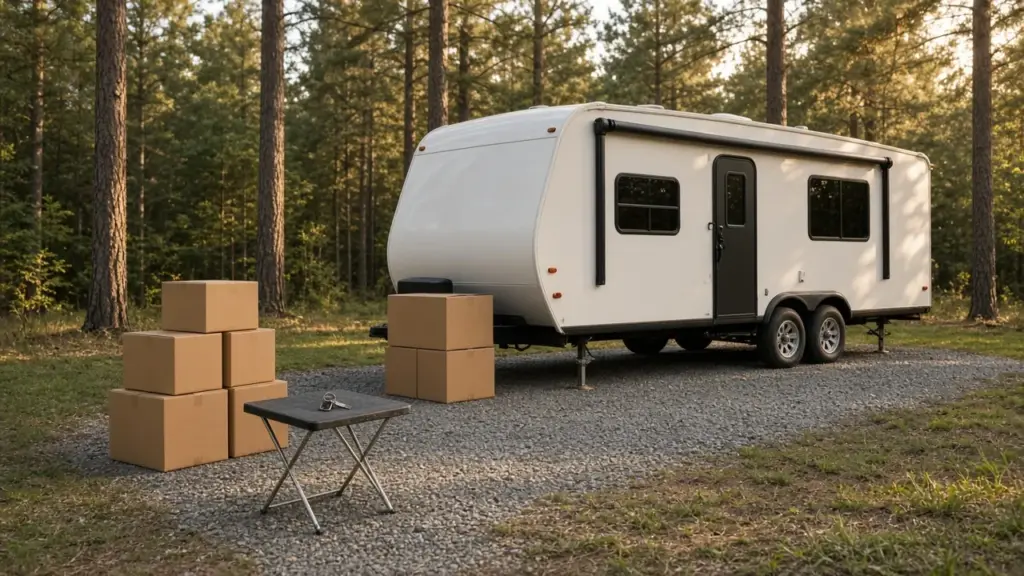
Relocating for a new job is a big undertaking. Between starting a new role, learning a new area, and finding a permanent home, the months after a move can be hectic. Some relocating employees choose to live in an RV while house hunting. It gives them a stable, comfortable home base while they explore neighborhoods without rushing into a purchase or lease.
This guide covers how to use an RV as temporary housing during a corporate relocation north of Houston. For a broader look at workforce housing, see our pillar on RV living for workers and contractors.
Why Some Relocating Employees Choose an RV
An RV can offer advantages during a move:
- Time to explore. You can learn the area before committing to a neighborhood.
- Familiar surroundings. Your own bed, kitchen, and belongings make the transition easier.
- Flexibility. Month-to-month arrangements at many parks let you move when the right home appears.
- Pets stay with you. Many parks welcome pets within their rules.
- Separation of steps. You can sell a previous home, start your job, and buy a new one on your own timeline.
It is not for everyone. Some families need more space, and some people prefer furnished apartments. But for individuals or couples comfortable with RV life, it can work well.
Talk With Your Employer
If your employer offers relocation benefits, ask how they apply to RV living:
- Will temporary housing benefits cover RV site rent?
- Are moving expenses for the RV covered?
- Is there a time limit on temporary housing support?
Get answers in writing. For tax questions about relocation benefits, consult a qualified professional.
Choosing a Location
North of Houston includes many communities, each with its own character. Magnolia offers a quieter, more rural feel while remaining connected to nearby towns and job centers through FM 1774, FM 1488, and Texas 249. Living in Magnolia while house hunting lets you explore Tomball, The Woodlands, Conroe, and surrounding areas.
If you will fly often for work, our post on getting to Bush Intercontinental Airport from Magnolia explains route and parking options.
Understanding Park Requirements
Long-term parks usually have an application process. At our park:
- RVs must be fully self-contained, in good condition, and 15 years or newer
- The background check fee is $49, through our screening partner; convicted felons are not permitted
- The security deposit is $125
- Nothing is reserved until approval and deposit
- The maximum is two people and two pets per site
- Each site allows up to two registered, running vehicles
- Residents carry liability and property insurance at state minimums
Occupancy limits matter for families. If your household is larger than two people, a park with our limits would not fit, and you may need a different housing option.
Timing Your Stay
House hunting can take longer than expected. Plan for:
- Time to explore neighborhoods
- Time to find and make an offer on a home
- Closing timelines
- Possible delays
Month-to-month flexibility is valuable. Ask parks about notice requirements. At our park, the deposit may be refunded if there is no damage and you give at least seven days’ notice.
Setting Up for a Temporary Stay
Even if you plan to stay only a few months, set up your site thoughtfully so daily life is comfortable. Keep important documents organized, since house hunting involves a lot of paperwork: pay stubs, bank statements, pre-approval letters, and ID. Keep them in a secure folder and backed up digitally.
Many long-term parks, including ours, do not allow items to be stored on or under the site. If you are between homes, you may need a storage unit for household goods until you close on a new home.
Working While You Search
Starting a new job is demanding. A quiet park helps you rest and focus. At our park, quiet hours run from 8 p.m. to 8 a.m., the park is long-term only with no overnight guests, and the entrance is gated. If you work from home some days, plan a workspace in your RV and protect your electronics with surge protection.
Exploring Neighborhoods
Use evenings and weekends to explore:
- Drive your commute from different neighborhoods at real commute times
- Visit grocery stores, parks, and restaurants
- Check school information if relevant
- Talk with locals and coworkers about their experiences
Our other area guides, such as trips to The Woodlands and Conroe, can help you get to know the region.
Comparing Temporary Housing Options
When deciding between an RV and other temporary housing, compare:
- Monthly cost, including site rent, utilities, and storage
- Space and comfort
- Flexibility and notice requirements
- Commute
- Pet policies
Our posts on travel nurses and medical staff living in RVs, energy and pipeline workers, and linemen and storm crews show how other workers weigh similar choices.
When You Find a Home
Once you close on a home, plan your move out of the park:
- Give notice according to your agreement
- Plan the RV’s next use: sell it, store it, or keep it for travel
- Clean your site and take photos
- Request your deposit refund within the required timeframe; at our park, refunds are requested within seven days of leaving
Handling Mail During Relocation
Mail can be tricky during a relocation. You may be forwarding mail from your old address while you look for a new one. Options include forwarding to a post office box, using a mail forwarding service, or asking whether the park can receive mail. Update your address with your employer, bank, insurance companies, and any agencies as needed. If you are in the middle of a home purchase, make sure your lender and real estate agent know how to reach you. Keeping mail organized avoids missed documents during an already busy time.
Keeping Stress Low During the Transition
Relocation combines several of life’s most stressful events: a new job, a move, and a home purchase. An RV can reduce some of that pressure by giving you a familiar space every night, but it helps to build in routines. Keep regular meal and sleep times. Set aside one evening each week with no house-hunting tasks. Explore parks, trails, and local restaurants for fun, not just research. Nearby W.G. Jones State Forest, Lake Conroe, and Sam Houston National Forest are good options for a relaxing weekend outing. Treating the temporary stay as a chance to enjoy a new area, rather than just a waiting period, makes the whole process more pleasant.
Frequently Asked Questions
Can I live in an RV while house hunting?
Yes, many people do. A long-term RV park can provide a stable home base while you explore neighborhoods and complete a purchase.
Will my employer’s relocation benefits cover RV site rent?
It depends on your employer. Ask what temporary housing benefits cover and get answers in writing.
Can my family of four stay at Magnolia’s Finest?
Our park allows a maximum of two people per site, so larger households would need a different option.
How much notice do I need to give when I find a home?
It varies by park. At our park, at least seven days’ notice is one of the conditions for a deposit refund.
A Quiet Base During Your Move
Magnolia’s Finest is a small, gated long-term park in Magnolia, TX. If you are relocating north of Houston, learn more about long-term RV living in Magnolia.
Check Availability or call or text (281) 205-1959
Magnolia’s Finest RV Park · 32020 Old Hempstead Rd, Magnolia, TX 77355 · Contact us