
Travel Trailer, Fifth Wheel, or Motorhome for Living Long-Term
August 18, 2026 · By Magnolia RV Park
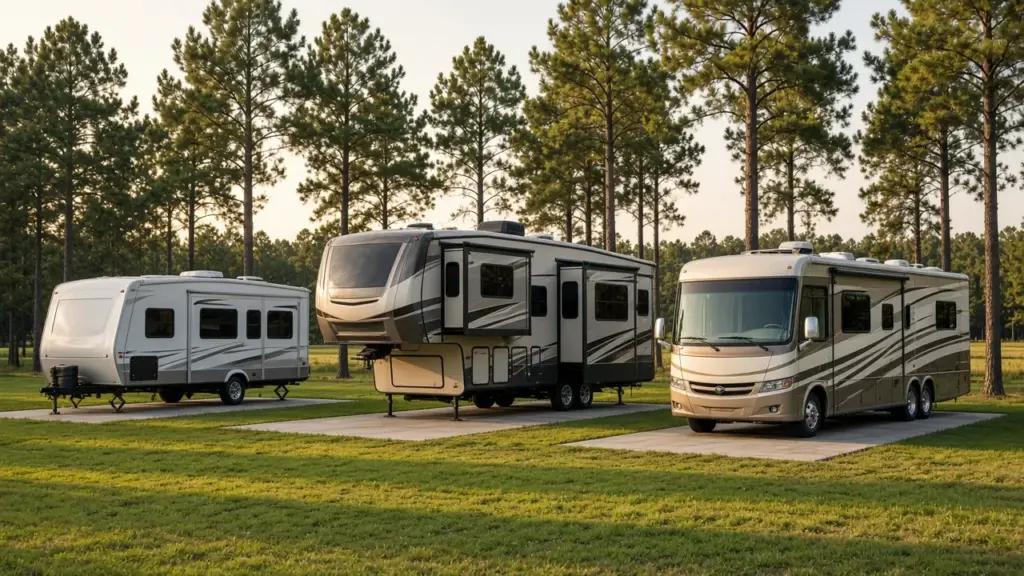
If you are planning to live in an RV long-term, one of the biggest decisions is what type of RV to live in. Travel trailers, fifth wheels, and motorhomes each have strengths and trade-offs. The right choice depends on your budget, space needs, how often you plan to move, and your daily routine.
This guide compares the three main RV types for long-term living. For a complete overview of monthly stays, see our pillar, Monthly RV Living: The Complete Guide.
Travel Trailers
Travel trailers are towed behind a truck or SUV using a bumper-pull hitch. They come in a wide range of sizes, from small, lightweight models to large trailers with slide-outs.
Advantages
- Often lower purchase price than fifth wheels or motorhomes
- Wide range of floor plans and sizes
- Your tow vehicle is free to use once the trailer is parked
- No engine to maintain in the living unit
Considerations
- Smaller models may feel cramped for long-term living
- Some have less storage than fifth wheels
- Towing requires a capable vehicle and some skill
- Build quality varies widely, so inspect carefully
Fifth Wheels
Fifth wheels are towed by a pickup truck using a special hitch mounted in the truck bed. The front section extends over the truck, often creating a raised bedroom.
Advantages
- Spacious layouts, often with high ceilings
- Separate living and sleeping areas
- Generous storage, including large basement compartments
- Stable towing compared with some bumper-pull trailers
- Your truck is free for daily use once parked
Considerations
- Requires a pickup truck with a fifth wheel hitch
- Steps to the upper level can be challenging for some people
- Larger models may not fit every site
- Higher purchase price than many travel trailers
Motorhomes
Motorhomes have a built-in engine and drive like a large vehicle. They come in several classes, including large Class A coaches, van-based Class B models, and Class C models with a cab-over bunk.
Advantages
- Everything is in one unit, with no separate tow vehicle required
- Easy access to living space while traveling
- Many models have built-in generators
Considerations
- You need a separate vehicle for daily errands, or you must disconnect and drive the motorhome
- More mechanical systems to maintain, including the engine and chassis
- Engines and generators need regular exercise when parked long-term
- Often higher purchase and maintenance costs
Comparing for Long-Term Living
Space and Comfort
Fifth wheels often offer the most residential feel, with spacious layouts and high ceilings. Large travel trailers and Class A motorhomes can also be comfortable. Smaller units may work for solo residents but can feel tight for couples.
Daily Transportation
With a travel trailer or fifth wheel, your tow vehicle is available for commuting once the RV is parked. With a motorhome, you typically need a second vehicle. At our park, each site allows up to 2 registered, running vehicles.
Maintenance
Towable RVs have fewer mechanical systems than motorhomes. Motorhomes require engine, transmission, and chassis maintenance in addition to the living unit. Extensive mechanic work is not allowed at our park, so plan major service at a shop.
Cost
Purchase prices vary widely. Consider insurance, maintenance, fuel, and the cost of a tow vehicle or second vehicle when comparing.
Park Requirements
Before buying, check the requirements of the parks you are considering. At our park:
- RVs must be fully self-contained
- RVs must be in good condition
- RVs must be 15 years old or newer
Also confirm that your RV will fit the site. Ask management about site dimensions and layout.
Downsizing Into an RV
Whatever type you choose, you will likely need to downsize. Our post on downsizing a house into an RV offers a room-by-room approach.
Avoiding Common Mistakes
First-timers sometimes choose an RV based on looks rather than practical needs. Our post on long-term RV living mistakes first-timers make covers other pitfalls.
Thinking About the Future
Consider how long you plan to live in an RV and what comes next. If you might sell later, choose a model that holds its value and keep good records. Our post on planning your next step after RV life discusses transitions.
Daily Life in Each Type
Picture your daily routine. Where will you work, cook, and relax? How easy is it to get in and out? In a quiet park, daily life is centered on your home; our post on what a quiet RV park is really like day to day offers a realistic picture.
Climate Considerations
In Southeast Texas, heat and humidity are major factors. Look for RVs with good insulation, efficient air conditioning, and good ventilation. Dual-pane windows and well-sealed slide-outs help keep interiors comfortable. Covered sites, like 8 of our 10 sites, can also help reduce heat.
Test Before You Buy
If possible, spend time in different RV types before buying. Tour models at dealers and RV shows, sit in each area of the floor plan, and imagine your daily routine. Some people rent an RV for a weekend to see how the layout works in real life. Pay attention to details like bed size, bathroom space, kitchen counter space, and where you would work or relax. Small differences in layout can make a big difference over months of living.
New vs. Used
Many long-term residents buy used RVs to save money. A used RV can be a great value, but inspect it carefully. Look for signs of water damage, such as soft floors, stained ceilings, and delaminated walls. Check the roof, seals, tires, appliances, and, for motorhomes, the engine and generator. Consider hiring a professional RV inspector before buying. Remember that at our park, RVs must be 15 years old or newer, so check the model year before you buy.
New RVs come with warranties and the latest features, but they depreciate quickly and can still have issues. Whether new or used, a careful walkthrough and a good understanding of the RV’s systems help you avoid surprises.
Weight and Towing Capacity
If you choose a towable, make sure your vehicle can safely tow it. Check your truck or SUV’s towing capacity, payload, and hitch rating, and compare them with the RV’s loaded weight, not just its dry weight. Full-time residents tend to carry more belongings than weekend campers, which adds weight. Towing near or over your vehicle’s limits is unsafe and can damage your vehicle. If you are unsure, talk with a knowledgeable dealer or technician.
Choosing With Confidence
There is no single perfect RV. The best choice fits your budget, lifestyle, and daily needs, and meets the requirements of the park where you plan to live.
Frequently Asked Questions
What type of RV is best for long-term living?
It depends on your needs. Fifth wheels often offer the most residential feel, while travel trailers can be more affordable and motorhomes offer all-in-one convenience.
What are the RV requirements at the park?
RVs must be fully self-contained, in good condition, and 15 years old or newer.
How many vehicles can I have?
Up to 2 registered, running vehicles per site.
Can I do major engine work at my site?
No. Extensive mechanic work is not allowed at our park.
Find the Right Site for Your RV
Review sites and rates, learn about long-term RV living in Magnolia, or check availability.
Check Availability or call or text (281) 205-1959
Magnolia’s Finest RV Park · 32020 Old Hempstead Rd, Magnolia, TX 77355 · Contact us