
Record Keeping for Full-Time RVers
July 21, 2026 · By Magnolia RV Park
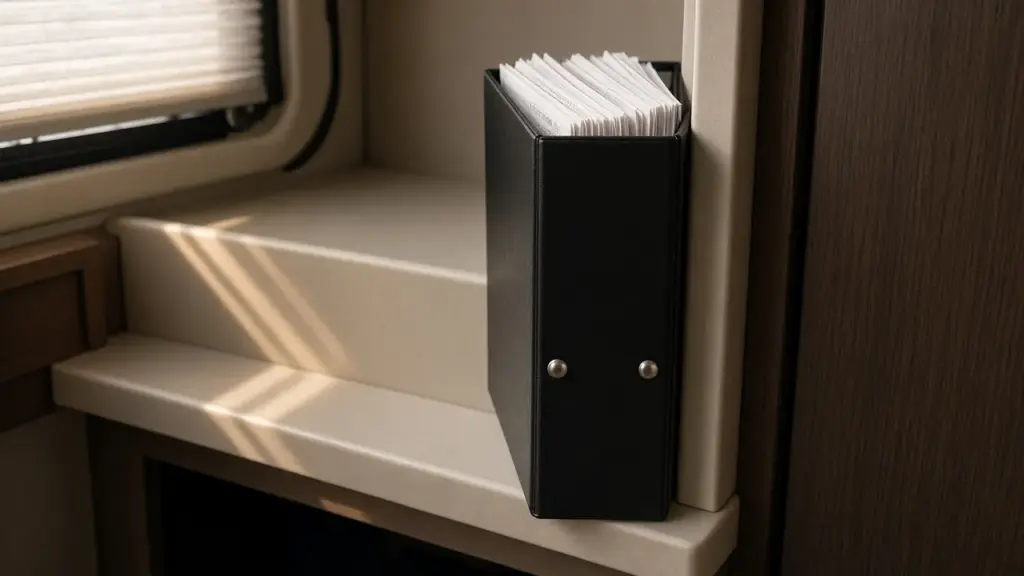
When you live full-time in an RV, your home and your vehicle are often the same thing, and your paperwork follows you wherever you go. Keeping good records makes life easier when you need to renew registration, file an insurance claim, apply to a new park, do your taxes, or sell your RV. Without a system, important documents can get lost in a small space or damaged by moisture.
This guide covers what records full-time RVers should keep and how to organize them. For a broader look at money and paperwork in RV life, see our pillar, Full-Time RV Life on a Budget: Planning Money, Space, and Paperwork.
Why Record Keeping Matters for RVers
Good records help you:
- Prove ownership and registration of your RV and vehicles
- File insurance claims quickly
- Track maintenance and repairs
- Apply to RV parks and jobs
- Manage your budget and taxes
- Access medical information in an emergency
- Sell your RV with a documented history
In a small living space, a simple, organized system saves time and stress.
Vehicle and RV Documents
Keep these documents organized and accessible:
- Titles for your RV and vehicles
- Registration documents
- Insurance cards and policy documents
- Loan or financing paperwork
- Purchase agreements and bills of sale
- Warranty information
Keep original titles in a secure place, such as a fireproof, waterproof document box. Carry copies of registration and insurance in your vehicle as required.
Insurance Records
Insurance is a key part of RV life. At our park, residents need liability and property insurance at state minimums. Keep your policy documents, declarations pages, and contact information for your agent and insurer. Take photos or video of your RV’s interior, exterior, and valuables to document their condition for potential claims.
Housing Records
Keep records related to where you live:
- Park agreements and rules
- Rent receipts or payment confirmations
- Deposit receipts
- Correspondence with park management
- Move-in and move-out notes and photos
At our park, rent can be paid by Zelle (preferred), cash, check, money order, or card, with card fees that may apply. Keep confirmations for every payment. The $125 deposit is refundable with no damage and at least 7 days’ notice, so keeping move-in photos and move-out records can be helpful.
Maintenance Records
A maintenance log is one of the most valuable records an RVer can keep. Include:
- Dates of inspections and service
- Repairs and parts replaced
- Receipts from technicians and shops
- Roof and seal maintenance
- Tire age and replacements
- Generator and engine service for motorhomes
A documented maintenance history helps you stay on schedule, supports warranty claims, and increases your RV’s value when selling.
Financial Records
Track your income and expenses. Keep:
- Pay stubs and income records
- Bank and credit card statements
- Receipts for major purchases
- Utility bills if applicable
- Tax returns and supporting documents
Tracking utility and energy costs can help you find savings. Our post on reducing energy use to keep RV costs predictable offers ideas.
Medical Records
Keep copies of important medical information:
- Insurance cards
- Medication lists
- Vaccination records
- Allergies and conditions
- Doctor contact information
Our post on health insurance and doctors as a full-time RVer covers healthcare planning in more detail.
Pet Records
If you have pets, keep vaccination records, vet contact information, and any medical history. Parks may ask for proof of vaccinations.
Address and Mail
Full-time RVers need to think about how they receive mail and what address they use for official documents. We do not claim mail or package acceptance at our park, so ask management about options. Our post on mail forwarding and addresses for RV residents explains common approaches.
Going Digital
Digital records are easy to store and access anywhere. Scan or photograph important documents and store them securely in cloud storage or on an encrypted drive. Organize files into folders such as Vehicle, Insurance, Housing, Medical, and Financial.
Keep backups in more than one place. If your phone is lost or damaged, you still have access to your records.
Protecting Paper Records
Some documents, like titles, need to be kept in original paper form. Protect them from:
- Moisture. Southeast Texas humidity can damage paper. Use waterproof containers.
- Fire. Store originals in a fire-resistant box. Our post on grilling and fire safety at an RV park covers broader fire prevention.
- Loss. Keep documents in one known location.
A Simple System
You do not need an elaborate system. Many full-time RVers use:
- A small fireproof, waterproof box for originals
- A folder or binder for current documents
- Digital copies in cloud storage
- A simple spreadsheet or app for maintenance and expenses
Review your records periodically and remove outdated items.
Keeping Records Current
Set reminders for renewals, such as registration, insurance, driver licenses, and inspections. Update your records whenever something changes, such as a new vehicle or policy.
Records for Applying to Parks
Many parks screen applicants. At our park, there is a $49 background check through a screening partner. Having your identification, vehicle information, and insurance ready makes applying easier.
How Long to Keep Records
Different records have different useful lifespans. Titles and purchase documents should be kept as long as you own the RV or vehicle, and often a while after selling. Maintenance records are worth keeping for the life of the RV, since they document its history. Tax records are typically kept for several years, so check official guidance on how long to retain them. Rent receipts and park correspondence are worth keeping at least until your deposit has been returned and any questions are resolved.
When records are no longer needed, dispose of them securely. Shred documents containing personal or financial information rather than tossing them in the trash.
Emergency Access to Records
Think about how you would access your records in an emergency, such as an evacuation during hurricane season or a sudden trip to the hospital. Keep a small “grab and go” folder with copies of your identification, insurance cards, medication list, emergency contacts, and pet vaccination records. Store it where you can reach it quickly on your way out the door.
It also helps to share key information with a trusted family member or friend. If something happens to you, they will know where your records are and whom to contact. Some RVers keep a simple document listing their accounts, insurance policies, and important contacts, stored securely and shared only with a trusted person.
Making It a Habit
The best record-keeping system is one you actually use. Set aside a few minutes each week to file receipts, scan new documents, and update your maintenance log. Waiting until tax season or an insurance claim to organize everything turns a small task into a stressful one. Small, regular habits keep your paperwork under control.
Frequently Asked Questions
What documents should full-time RVers keep?
Titles, registration, insurance, park agreements, rent receipts, maintenance logs, financial records, and medical records.
How should I protect paper records in an RV?
Use a fireproof, waterproof box and keep documents in one known location.
Should I keep digital copies?
Yes. Store digital copies securely in more than one place.
Does the park accept mail?
We do not claim mail or package acceptance. Ask management about options.
Build a Stable Life in Magnolia
Review sites and rates, learn about long-term RV living in Magnolia, or check availability.
Check Availability or call or text (281) 205-1959
Magnolia’s Finest RV Park · 32020 Old Hempstead Rd, Magnolia, TX 77355 · Contact us