
Caring for Senior Pets in RV Living
July 8, 2026 · By Magnolia RV Park
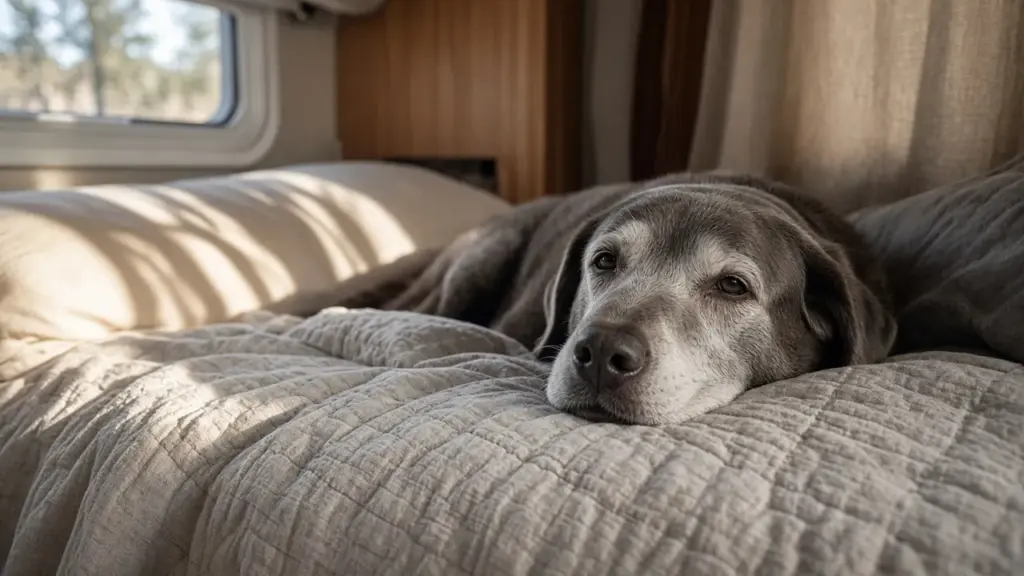
Many long-term RV residents share their homes with pets who have been with them for years. As dogs and cats age, their needs change. Older pets may move more slowly, need more rest, handle heat less well, and require more frequent vet visits. With a few adjustments, an RV can be a comfortable, loving home for a senior pet.
This guide covers practical ways to care for aging pets in RV living. For a broader look at pets and long-term RV life, see our pillar, Long-Term RV Living With Pets: A Complete Guide.
Recognizing When Your Pet Is a Senior
Dogs and cats are often considered seniors somewhere around seven years old, though it varies by size and breed. Larger dogs tend to age faster than smaller dogs. Signs of aging include:
- Slower movement or stiffness
- Graying fur around the face
- Sleeping more
- Changes in appetite or weight
- Reduced hearing or vision
- Changes in behavior or patience
Your veterinarian can help you understand your pet’s stage of life and what care they need.
Making Your RV Senior-Friendly
RVs often have steps, narrow spaces, and slippery floors that can be hard on older pets. Small changes help a lot.
Steps and Entry
RV steps can be steep for older dogs with sore joints. Consider a pet ramp or sturdy step to make entering and exiting easier. For small dogs, carrying them in and out may be simplest.
Flooring
Smooth RV floors can be slippery. Add non-slip rugs or runners where your pet walks most, especially near entry doors and food and water bowls.
Comfortable Bedding
Senior pets appreciate soft, supportive beds. Orthopedic pet beds can ease joint pain. Place the bed in a quiet spot away from drafts and direct sunlight.
Easy Access to Food and Water
Raised bowls can help dogs with neck or back issues. Keep water available at all times.
Limiting Climbing
If your pet used to jump onto couches or beds, consider pet stairs or keeping their favorite spot at floor level.
Heat Safety for Older Pets
Southeast Texas summers are hot and humid, and senior pets are more sensitive to heat. They may overheat more easily and take longer to recover.
- Keep your RV cool with your built-in air conditioning. Window AC units are not allowed at our park, so rely on your RV’s system.
- Walk your pet in the early morning or evening when it is cooler.
- Watch for signs of overheating, such as heavy panting, drooling, weakness, or confusion.
- Keep walks short on hot days.
- Remember that pavement and cement can be very hot for paws.
Consider a temperature monitor that alerts your phone if the RV gets too hot while you are away. The park is not responsible for pets left in the RV, so plan carefully for their comfort and safety.
Cold Weather Care
Older pets also feel the cold more. During cold snaps, keep your RV warm with your furnace, provide extra blankets, and limit time outside. Space heaters are prohibited at our park, so use safe alternatives.
Regular Vet Care
Senior pets benefit from more frequent checkups. Many vets recommend twice-yearly visits for older pets. Regular exams can catch issues like arthritis, dental disease, kidney problems, and weight changes early.
Keep your pet’s medical records organized and easy to access. Find a local vet you trust and know where the nearest emergency vet is.
Continue parasite prevention year-round. Our post on flea, tick, and heartworm prevention in Southeast Texas explains why it matters here.
Managing Medications
Older pets often need daily medications. Keep them organized with a pill organizer, and set reminders on your phone. Store medications according to label directions, keeping in mind that RVs can get hot.
Exercise and Mental Stimulation
Senior pets still need activity, just at a gentler pace. Short, frequent walks keep joints moving. Puzzle toys and gentle games keep their minds sharp.
Dogs at our park must be leashed outside and never left outside unattended. Walk only in appropriate areas, and respect empty lots and neighboring sites; see our post on respecting empty lots and neighboring sites. Always pick up after your pet.
Navigating the Park Safely
Older pets with reduced vision or hearing may be startled more easily. Keep them close on leash, especially around other animals. The park has resident animals, and some fencing is electric. Our post on pets around park animals and fencing explains how to keep everyone safe.
Introducing an Older Pet to Neighbors
Senior pets may be less tolerant of new dogs or lots of activity. Introduce them slowly and respect their limits. Our post on introducing your pet to RV park neighbors has helpful tips.
Routine and Comfort
Older pets thrive on routine. Keep feeding, walking, and sleeping times consistent. Familiar bedding and toys help them feel secure, especially after a move.
Planning for End-of-Life Care
It is hard to think about, but planning ahead helps. Talk with your vet about quality of life, pain management, and options when the time comes. Knowing your plan reduces stress during a difficult time.
Park Pet Policies
At our park, each site may have up to 2 pets. Aggressive breeds are not allowed. Dogs live primarily inside, are leashed outside, and are never left outside unattended. Owners must pick up waste. Pets and smoking are not allowed in the laundry room.
Watching for Changes
Because you share a small space with your pet every day, you are in a great position to notice changes early. Pay attention to how much your pet eats and drinks, how easily they get up from their bed, how they handle the steps, and whether their bathroom habits change. Increased thirst, accidents inside, trouble standing, or a sudden loss of interest in food can all signal health problems that deserve a vet visit.
Keep a simple journal or notes on your phone. Writing down small changes, along with dates, makes it easier to explain what you have seen to your veterinarian and helps them make better decisions about care.
Grooming and Dental Care
Senior pets may need extra help with grooming. Older dogs and cats sometimes groom themselves less, and their nails may grow longer if they are less active. Regular brushing keeps coats healthy and gives you a chance to check for lumps, sores, or ticks. Trim nails regularly so they do not affect your pet’s footing on smooth RV floors.
Dental disease is common in older pets and can cause pain and other health issues. Ask your vet about dental cleanings and at-home care such as brushing or dental chews.
Giving Them a Calm Space
Older pets appreciate a quiet retreat. Choose a spot in your RV where your pet can rest undisturbed, away from the door and busy walkways.
Frequently Asked Questions
Can senior pets live comfortably in an RV?
Yes. With ramps, non-slip rugs, supportive bedding, and good climate control, many older pets do well.
How do I keep my older dog cool in summer?
Use your RV’s air conditioning, walk during cooler hours, and watch for signs of overheating.
How often should senior pets see a vet?
Many vets recommend twice-yearly visits for older pets.
How many pets are allowed per site?
Up to 2 pets per site, and aggressive breeds are not allowed.
Bring Your Companion Home to Magnolia
Magnolia’s Finest RV Park welcomes pets under our policies. Read our FAQ, review our park rules, or check availability.
Check Availability or call or text (281) 205-1959
Magnolia’s Finest RV Park · 32020 Old Hempstead Rd, Magnolia, TX 77355 · Contact us