
Checking an RV Park’s Location Before You Move In
May 16, 2026 · By Magnolia RV Park
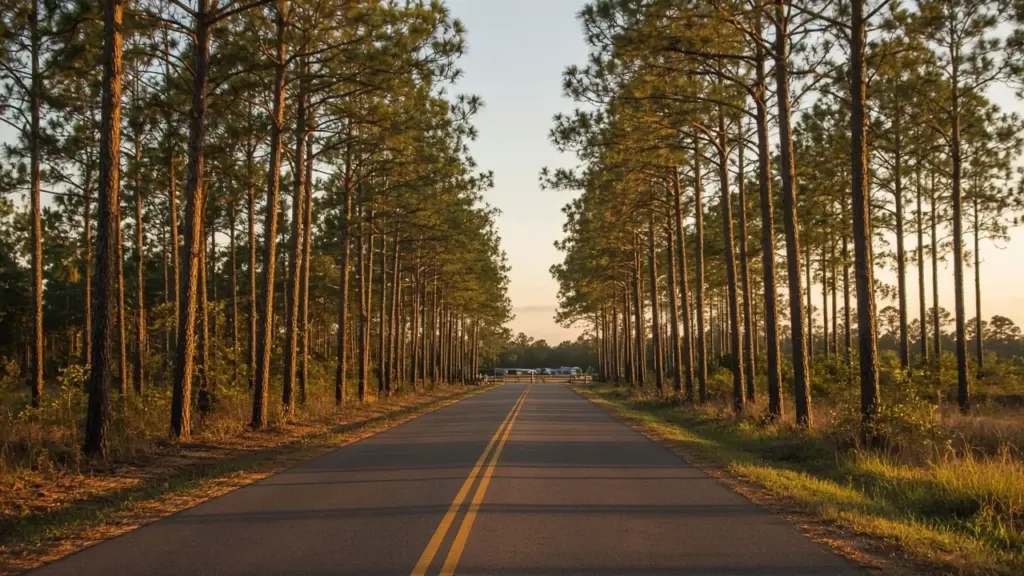
When you choose a long-term RV park, you are not just choosing a site. You are choosing a neighborhood, a commute, a set of nearby services, and a daily environment. A park can look perfect in photos, but if the location does not fit your life, you may regret it after a few weeks.
This guide explains how to check an RV park’s location before you move in, so you can make a confident decision. For a related comparison of park types, see our pillar on small RV parks vs. big RV resorts.
Why Location Matters So Much for Long Stays
For a weekend trip, location is mostly about attractions. For a long stay, location affects nearly every part of your day: how long you spend driving to work, where you buy groceries, how quiet your nights are, and how easy it is to get help when something breaks.
A great location for one person may not suit another. A contractor working in northwest Houston has different needs than a retiree who wants quiet and nature, or a family building a home nearby. Start by listing what matters most to you.
Map Your Daily Routes
The first step is understanding how the park connects to the places you go most often.
- Work. Map the route to your job site or office at the times you will actually drive. Traffic patterns vary widely by time of day.
- Groceries and errands. Identify where you will shop and handle everyday errands.
- Medical care. Know where the nearest urgent care, hospital, and pharmacy are.
- Fuel. Find convenient fuel stations for your vehicles.
- Recreation. Consider parks, lakes, trails, gyms, or places of worship you plan to visit.
Our park sits at 32020 Old Hempstead Rd in Magnolia. Residents commonly use FM 1774 toward Pinehurst and SH 249 to the south, or toward Todd Mission and Plantersville to the north. FM 1488 runs east toward Conroe and The Woodlands and west toward Hempstead. SH 249 connects to Tomball and north Houston.
Check Road Access for Your Rig
Road access matters when you are towing or driving a large RV. Before you commit, look at:
- The roads leading to the park and whether they suit your rig
- Turns and entrances
- Low branches or tight corners
- How the park’s entrance and internal drives are laid out
At our park, the entrance is gated, internal drives have a 10 mph speed limit, and driving or parking on the grass is not allowed. RVs must arrive before 6 pm, and gate and arrival notes are sent by text. Knowing these details in advance makes move-in day easier.
Consider Noise and Surroundings
Noise can make or break a long stay. Visit the area at different times of day if possible, and notice:
- Traffic noise from nearby highways or busy roads
- Rail lines, airports, or industrial activity
- Commercial areas with late-night activity
- The overall feel of the surrounding area
Many people choose areas outside the city for a quieter environment. Magnolia offers a more rural setting than much of the Houston area while still connecting to major roads.
Look at Flood Risk and Drainage
In Southeast Texas, heavy rain and tropical storms can cause flooding. Hurricane season runs from June 1 to November 30. When evaluating a park’s location:
- Look at the terrain and drainage around the park
- Ask how the park handles heavy rain
- Research local flood information from official sources
- Consider your evacuation routes
Cement pads, like those at our park, help keep sites stable in wet weather. Still, every resident should have a storm plan.
Check Connectivity
If you work remotely, stream TV, or rely on your phone, check cell coverage in the area before moving in. Coverage can vary significantly from one location to another. Internet service is confirmed per site at our park, so ask before you arrive.
Visit If You Can
Nothing replaces seeing a location in person. If possible, drive the area before you commit. Notice the condition of nearby roads, the feel of the neighborhood, and how long it takes to reach the places you care about. Talk to park management about the area and ask questions.
If you cannot visit, use maps and satellite views, read about the community, and ask the park detailed questions.
Think About the Long Term
A location that works for a month might not work for a year. Consider:
- Seasonal changes in traffic, such as the Texas Renaissance Festival traffic near Todd Mission each fall
- Weather patterns throughout the year
- Changes in your work or family plans
- Access to services you may need later
Compare Location With Other Housing Options
It can help to compare an RV park’s location with other housing options you are considering. Our post on RV park vs. apartment living explains the tradeoffs in cost, space, and flexibility.
Location and Management Go Together
A great location is only part of the picture. The park’s management, rules, and condition also shape your experience. Our post on why management style matters more than amenities explains what to look for.
If a park in your preferred location is full, consider joining its waitlist. Our guide to RV park waitlists explains how they work.
Paperwork After You Move
Once you settle into a new location, you may need to update official records, especially if you are moving from another state. Our post on getting a Texas driver license after a move covers one of the first steps.
Questions to Ask the Park About Location
Park management knows the area well and can answer questions that maps cannot. Consider asking:
- What do most residents do for work, and where do they commute?
- How does the park handle heavy rain and storms?
- Are there any seasonal events or traffic patterns I should know about?
- What is the best route in and out of the park with a large rig?
- How do mail and deliveries work at this address?
The answers can reveal a lot about daily life at the park and whether it matches your needs.
Balancing Quiet and Convenience
Many people want a quiet setting and easy access to shopping, work, and services. The right balance depends on your priorities. A park farther from the city usually offers more space, less noise, and a slower pace, with a bit more driving for errands. A park closer to the city may be more convenient but noisier and busier. Think honestly about how often you will need to drive into town, and whether a quiet evening at home is worth a slightly longer trip.
Location Checklist
- Map routes to work, errands, and medical care
- Check road access for your rig
- Visit at different times to assess noise
- Research flood risk and drainage
- Test cell coverage
- Consider seasonal changes
- Compare with other housing options
Frequently Asked Questions
Where is Magnolia’s Finest RV Park located?
32020 Old Hempstead Rd, Magnolia TX 77355, in Montgomery County.
What major roads are near the park?
FM 1774, FM 1488, and SH 249 connect the area to Pinehurst, Todd Mission, Plantersville, Conroe, The Woodlands, Tomball, and north Houston.
Is internet available at the park?
Internet is confirmed per site. Call or text (281) 205-1959 to ask.
What time do RVs need to arrive?
RVs must arrive before 6 pm. Gate and arrival notes are sent by text.
See If Magnolia Fits
Magnolia’s Finest RV Park is a small, gated long-term community north of Houston. View sites and rates, explore our amenities, or check availability.
Check Availability or call or text (281) 205-1959
Magnolia’s Finest RV Park · 32020 Old Hempstead Rd, Magnolia, TX 77355 · Contact us