
Moving to a New RV Park With Pets
April 28, 2026 · By Magnolia RV Park
Moving to a new RV park is a big change for people, and it can be an even bigger change for pets. Dogs and cats rely on routine and familiar surroundings. A new site means new sounds, smells, neighbors, and rules. With some planning, though, you can make the transition smooth and help your pets settle into their new home quickly.
This guide covers moving to a new long-term RV park with pets, from choosing a park and preparing paperwork to travel day and the first few weeks. For a broad overview of life with animals in an RV, start with our pillar, Long-Term RV Living With Dogs and Cats: A Practical Guide.
Start With the Pet Policy
Before you commit to a park, read its pet policy carefully. Policies vary widely, and it is much easier to find a good fit before you move than to discover a problem after you arrive.
Common pet policy topics include:
- Number of pets allowed. Many parks set a limit per site.
- Breed restrictions. Some parks restrict certain breeds.
- Leash rules. Most parks require leashes outside the RV.
- Waste cleanup. Owners are almost always responsible for picking up after pets.
- Unattended pets. Many parks do not allow pets to be left outside alone.
- Pet areas and restrictions. Some areas, like laundry rooms, may be off-limits.
At Magnolia’s Finest, each site allows up to 2 pets, and aggressive breeds are not allowed. Dogs live primarily inside, are leashed outside, and are never left outside unattended. Owners pick up waste, and pets are not allowed in the laundry room. Our post on why pets can’t be left outside unattended explains the reasoning.
Gather Records and Supplies
Before moving day, organize your pets’ paperwork:
- Current vaccination records
- Recent vet visit notes and any medical history
- Microchip information, updated with your new contact details
- Photos of each pet, in case one gets lost
- Prescription medications and enough supply to cover the transition
Find a veterinarian near your new park before you arrive, and know where the nearest emergency animal hospital is. Having this information ready gives you peace of mind if something comes up during the first weeks.
Prepare Your RV for Pets
Your RV should be safe and comfortable for pets before you move. Secure loose items, cover or tuck away electrical cords, and make sure screens and doors latch properly. Our post on pet-proofing an RV interior covers the details.
Set up familiar items in the RV: beds, blankets, toys, food and water bowls, and litter boxes for cats. Familiar smells help pets feel at home in a new location.
Check that your air conditioning is working well. Southeast Texas heat can be dangerous for pets, and the park is not responsible for pets left in the RV. A temperature monitor that sends alerts to your phone is a worthwhile investment.
Travel Day
Travel can be stressful for pets. A few precautions make it easier:
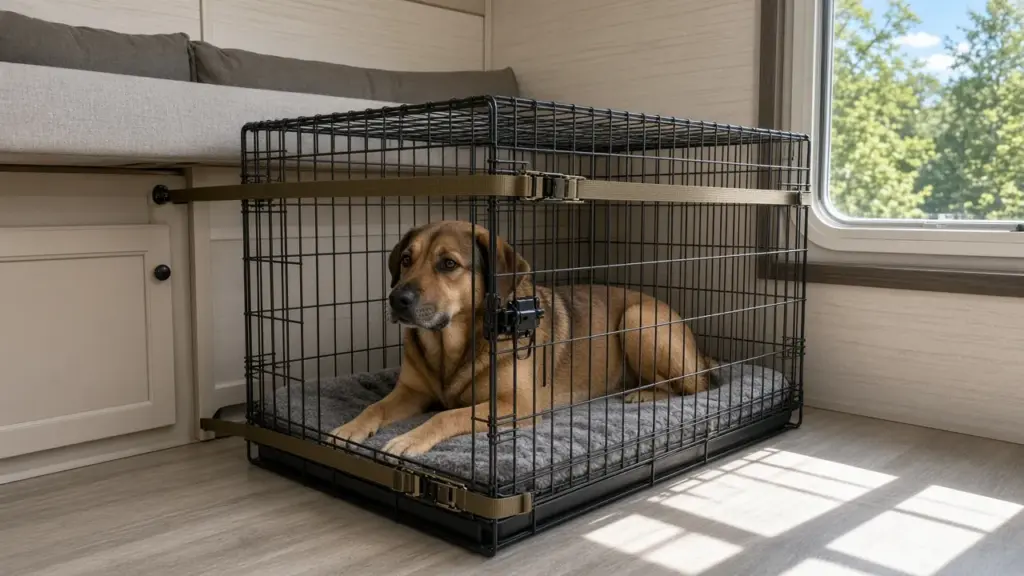
- Secure pets while driving. Use crates or pet seat belts in your tow vehicle, and never let pets roam in a moving RV.
- Plan breaks. Stop regularly for water and bathroom breaks, and always leash dogs at stops.
- Keep feeding light. A smaller meal before travel can reduce motion sickness.
- Never leave pets in a hot vehicle. Temperatures rise quickly, even with windows cracked.
- Bring a travel kit. Pack water, food, bowls, waste bags, leashes, medications, and cleaning supplies.
Plan to arrive during daylight. At our park, RVs must arrive before 6 pm, and gate and arrival notes are sent by text. Arriving with time to spare lets you set up calmly and give pets attention.
Arrival and Setup
When you arrive, keep pets secured inside the vehicle or RV while you back in and connect hookups. Moving vehicles, open doors, and unfamiliar surroundings can lead a nervous pet to bolt.
Once you are set up, take dogs on a leashed walk to explore. Let them sniff and get familiar with the area at their own pace. Cats should stay inside, where they can explore the RV and settle in.
Introduce yourself to neighbors, and keep interactions with other pets calm and controlled. Not every dog wants to meet new friends right away.
Park Animals and Fencing
Some parks have resident animals or unique features on the property. At our park, there are park animals, and a treat bin is located at the gate. Some fencing is electric, so keep dogs leashed and away from fences. Let your pets get used to new animals gradually and from a safe distance.
Helping Pets Settle In
Most pets adjust within a few days to a few weeks. You can help by:
- Keeping routines consistent. Feed, walk, and play at the same times as before.
- Providing exercise. A tired dog is a calmer dog. In summer, walk early or late. Our post on exercising dogs in the Texas heat has tips.
- Giving extra attention. Spend time with your pets as they adjust.
- Watching for stress. Signs include pacing, hiding, excessive barking, loss of appetite, or accidents. Talk with a vet if stress continues.
Barking can be a problem in a new place. Dogs may react to unfamiliar sounds. Be patient, reward calm behavior, and consider white noise to mask outside noise. Remember that quiet hours are 8 pm to 8 am.
Being a Good Pet-Owning Neighbor
In a small park, good pet manners make a big difference. Pick up waste every time, keep dogs leashed outside, prevent excessive barking, and never leave pets outside alone. Respect neighbors who may be nervous around animals or have pets of their own.
If a problem comes up with park property, such as a gate or fence, report it through the proper channel. Our post on reporting maintenance issues explains how.
Exploring the Area Together
Once your pets have settled in, exploring the area together can be a great way to bond and burn energy. Magnolia is close to outdoor spaces such as W.G. Jones State Forest and Sam Houston National Forest, where leashed dogs can enjoy new trails. Check each location’s pet rules before you go, bring plenty of water, and avoid the hottest part of the day in summer. Exploring together helps both you and your pets feel at home in your new community.
Moving Checklist for Pet Owners
- Read and confirm the park’s pet policy
- Gather vaccination records and update microchip information
- Find a local vet and emergency clinic
- Pet-proof the RV and check the AC
- Pack a travel kit
- Plan to arrive during daylight
- Keep pets secured during setup
- Maintain routines and watch for stress
Frequently Asked Questions
How many pets are allowed at Magnolia’s Finest?
Up to 2 pets per site. Aggressive breeds are not allowed.
Can I leave my dog outside while I’m at work?
No. Dogs live primarily inside, are leashed outside, and are never left outside unattended.
How long does it take pets to adjust to a new RV park?
Most pets adjust within a few days to a few weeks. Consistent routines help.
Are pets allowed in the laundry room?
No. Pets and smoking are not allowed in the laundry room.
What records should I bring for my pets?
Bring vaccination records, medical history, microchip information, photos, and medications.
Bring Your Pets to Magnolia’s Finest
Magnolia’s Finest RV Park is a small, gated long-term community that welcomes responsible pet owners. Read our FAQ, review the park rules, or check availability.
Check Availability or call or text (281) 205-1959
Magnolia’s Finest RV Park · 32020 Old Hempstead Rd, Magnolia, TX 77355 · Contact us