
Newer vs. Older RVs for Full-Time Living
April 16, 2026 · By Magnolia RV Park
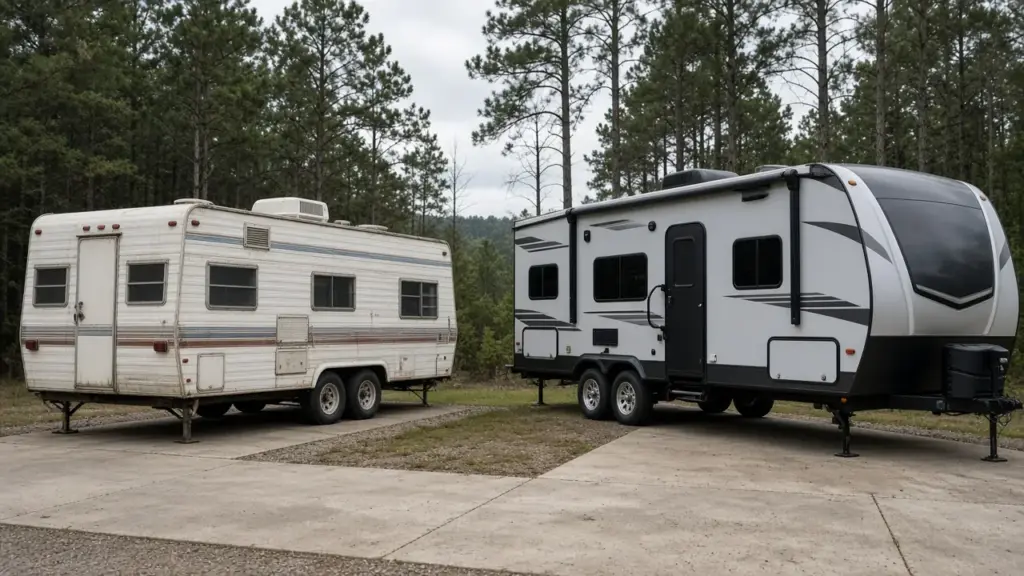
When you shop for an RV to live in, one of the first decisions is whether to buy newer or older. A newer RV offers modern features and fewer immediate repairs, but it costs more and depreciates quickly. An older RV costs less upfront but may need more maintenance and may not meet every park’s standards. The right choice depends on your budget, skills, and plans.
This guide compares newer and older RVs for full-time living. For a broader money framework, see our pillar on full-time RV life on a budget.
Park Age Requirements
Many long-term parks set age limits for RVs. At Magnolia’s Finest, RVs must be fully self-contained, in good condition, and 15 years old or newer. Before you buy, consider how old the RV will be over the years you plan to live in it. An RV that is 12 years old today will exceed a 15-year limit in just a few years.
Upfront Cost
Newer RVs cost more. Older RVs can be much less expensive, freeing up money for other needs. Our post on financing an RV you plan to live in covers loan considerations.
Depreciation
New RVs lose value quickly in the first few years. Buying a lightly used RV a few years old can avoid the steepest depreciation while still offering relatively modern features and condition.
Reliability and Repairs
Newer RVs generally have fewer worn components. Warranties may cover some repairs. Older RVs may need roof work, seal replacement, appliance repairs, or new tires. If you are handy, you may be able to handle some repairs yourself. If not, budget for professional service.
Inspection Is Essential
For any used RV, a thorough inspection is critical. Our post on buying a used RV for full-time living provides a detailed checklist. Water damage is the most common hidden problem in older RVs.
Features and Comfort
Newer RVs often have better insulation, more efficient appliances, LED lighting, updated layouts, and modern electrical systems. These features can matter for comfort in Southeast Texas heat. Older RVs may lack some features but can be upgraded over time.
Insurance
Insurance costs and availability can vary by RV age and value. At our park, RV insurance must include liability and property coverage at state minimums. Get quotes before buying.
Energy Efficiency
Newer RVs may have better insulation and more efficient AC units, which can make summer more comfortable and reduce energy use. Older RVs can be improved with window coverings, sealing, and upgraded components.
Layout for Full-Time Living
Regardless of age, choose a layout that works for daily life. Look for a comfortable bed, adequate storage, a workable kitchen, and space to relax or work. Our post on storage solutions for full-time RV residents can help you evaluate storage.
Paying for Your RV and Rent
Budget for your RV payment or purchase, site rent, insurance, and maintenance. At our park, rent is paid monthly; Zelle is preferred, and cash, check, money order, and card are also accepted. Our post on banking and digital payments for RV residents covers managing payments.
Resale Considerations
If you plan to sell your RV in a few years, consider its future value and whether it will still meet park age requirements. An RV that ages out of park limits may be harder to sell to full-time buyers.
Maintenance Budget
Every RV needs maintenance. Older RVs usually need more. Set aside money each month for repairs. Common costs include tires, roof sealing, appliance repairs, and batteries.
Appearance and Condition
Parks often require RVs to be in good condition. Faded paint, peeling decals, or damaged exterior components may not meet park standards. Keeping an older RV in good shape takes regular care.
Finding the Right Age Range
Many full-time residents find the best balance in RVs that are a few years old: past the steepest depreciation, still modern, and well within park age limits for years to come.
Questions to Ask Yourself
- How long do I plan to live in this RV?
- How comfortable am I with repairs?
- What is my total budget, including maintenance?
- Which parks do I want to live in, and what are their requirements?
Upgrading an Older RV
If you choose an older RV, thoughtful upgrades can make it more comfortable and reliable. Common improvements include replacing worn mattresses, switching to LED lighting, upgrading the water pump, adding better window coverings, and resealing the roof. Some owners replace old carpet with easy-to-clean flooring, which also helps with humidity and pet hair. Prioritize upgrades that improve safety and prevent water damage first, then focus on comfort. Keep receipts and records, which can help when you eventually sell.
Planning for the Long Term
Think about where you want to be in five years. If you expect to stay in one area for a long time, choose an RV that will remain within park requirements for that period. If you plan to upgrade or move into a house later, a less expensive RV may make more sense. Matching the RV to your long-term plan helps avoid costly surprises.
Test Living Before Buying
Before committing to any RV, spend time inside it as if you already lived there. Sit at the dinette, lie on the bed, stand in the shower, and open every cabinet. Imagine a rainy week indoors or a hot afternoon working at the table. Newer and older RVs can both have layouts that look great in photos but feel awkward in daily use. Renting a similar model for a few days can reveal whether the size and layout truly fit your lifestyle.
Considering the Climate
In Southeast Texas, heat and humidity are major factors. Whether newer or older, an RV needs a strong air conditioning system, good seals, and effective insulation to stay comfortable. Ask about the age and condition of the AC unit, and look for signs of past humidity problems such as mildew or water stains. Covered sites help, and 8 of our 10 sites are covered, but the RV itself must be up to the job.
Talking With Experienced Owners
Owners who have lived full time in RVs of different ages can share valuable insights. Ask what they would do differently, which features mattered most, and what repairs surprised them.
Making the Choice
There is no single right answer. Choose the RV that fits your budget, comfort, and plans, and meets park requirements.
Frequently Asked Questions
What RV age does Magnolia’s Finest accept?
RVs must be 15 years old or newer, fully self-contained, and in good condition.
Is a newer RV better for full-time living?
Not always. Newer RVs have fewer repairs and modern features but cost more. A well-maintained older RV can work well if it meets park requirements.
What is the biggest risk with older RVs?
Hidden water damage. Always get a thorough inspection.
What insurance is required at the park?
RV insurance with liability and property coverage at state minimums.
Bring Your RV Home to Magnolia
Magnolia’s Finest RV Park is a small, gated long-term community. Review our sites and rates, learn about long-term RV living in Magnolia, or check availability.
Check Availability or call or text (281) 205-1959
Magnolia’s Finest RV Park · 32020 Old Hempstead Rd, Magnolia, TX 77355 · Contact us