Sun Damage to RV Roofs, Seals, and Tires
March 30, 2026 · By Magnolia RV Park
The Texas sun is relentless. For much of the year, strong UV rays and high temperatures beat down on everything outdoors, including your RV. When you live in an RV for months in one spot, the same surfaces face the sun day after day. Over time, UV exposure breaks down roofs, sealants, rubber seals, tires, decals, and even interior fabrics. Understanding how sun damage happens helps you prevent costly repairs.
This guide explains how the sun damages RV roofs, seals, and tires and what you can do about it. For a year-round weather overview, see our guide on Texas weather and your RV.
How UV Damage Works
Ultraviolet light breaks down the chemical bonds in many materials, especially rubber, plastics, and some roofing membranes. Heat speeds up the process. The result is cracking, fading, chalking, and brittleness. Damage is gradual, so it is easy to miss until something fails.
RV Roofs
The roof takes the most direct sun. Depending on the roof type, sun exposure can cause:
- Chalking or thinning of rubber membranes
- Cracking of sealant around vents, skylights, and seams
- Fading and brittleness of plastic vent covers and skylights
Inspect your roof regularly, and clean and treat it according to the manufacturer’s guidance for your roof type. Our post on fall in Southeast Texas as the best season for RV projects explains why fall is ideal for roof work.
Sealants and Seals
Sealant around windows, doors, roof fixtures, and seams dries and cracks under UV exposure. Rubber seals around doors, windows, and slide-outs can shrink and harden. Cracked seals let water in, which leads to hidden damage and mold.
Inspect seals seasonally and condition rubber seals with appropriate products. Reseal where sealant is cracking or separating.
Tires
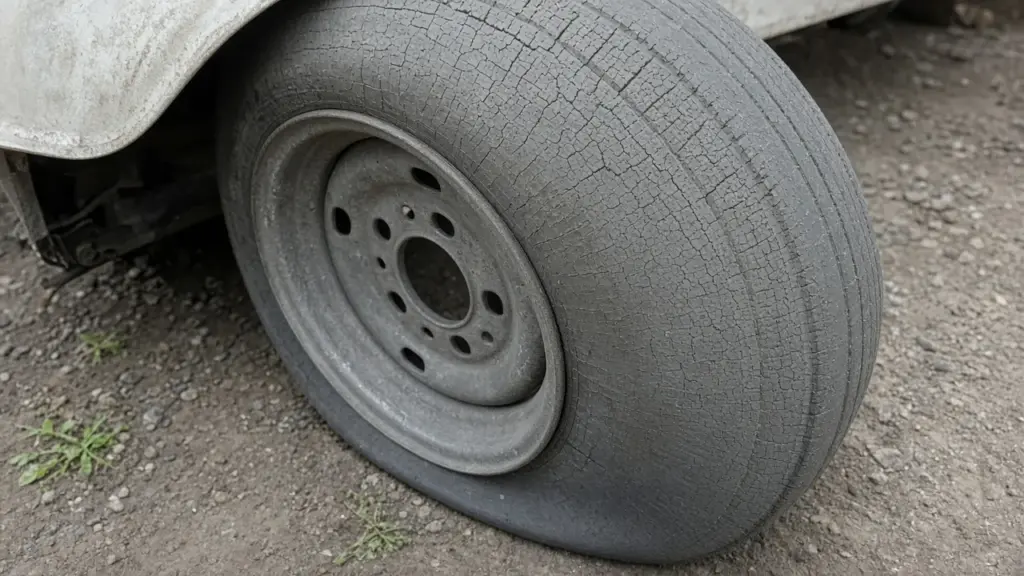
Tires on a parked RV face constant sun on one side. UV exposure causes:
- Sidewall cracking
- Dry rot
- Weakening of the rubber
Tires can look fine on the tread but be unsafe due to age and UV damage. Inspect sidewalls regularly for cracks. If you plan to move your RV, have tires checked by a professional first. At Magnolia’s Finest, tarps and covers are not allowed, so rely on covered sites and regular inspections rather than tire covers draped over the RV.
Decals and Graphics
Decals fade, crack, and peel in the sun. While mostly cosmetic, peeling decals can trap moisture. Keep them clean and remove or replace damaged graphics.
Awnings
Awning fabric fades and weakens over time. Retract awnings when not in use and during storms. Inspect fabric for tears and mildew.
Windows and Interiors
Sun through windows fades upholstery, curtains, and flooring and heats the interior. Use light-filtering or reflective shades designed for RVs. Foil on windows is not allowed at our park.
Plastic Components
Plastic vent covers, light lenses, and exterior fixtures can become brittle and crack. Replace damaged pieces promptly to prevent leaks and pests.
Covered Sites Make a Big Difference
The single most effective way to reduce sun damage is to park under cover. Covered sites shield the roof and upper walls from direct sun and reduce heat. At Magnolia’s Finest, 8 of our 10 sites are covered, and all sites are on cement pads.
Air Conditioning and Heat
Sun-heated roofs make your AC work harder. Keeping AC filters and coils clean helps it keep up. Reflective shades and covered sites reduce heat load.
Storms and Sun Together
Sun weakens materials, and storms test them. Seals weakened by UV are more likely to fail in heavy rain. Our post on spring storm season checklist for RV residents explains how to prepare for storm season.
Winter Considerations
Sun damage continues in winter, even when temperatures are mild. Freezes can stress already-weakened materials. Our post on winter freezes in Southeast Texas covers freeze protection.
Cleaning and Protectants
Keeping surfaces clean helps protectants work and lets you spot damage. Clean within park rules; vehicle washing is not allowed at our park. Waterless products and hand wiping work well. When cleaning around drains and hookups, use septic-safe products; our post on septic-safe toilet paper and cleaning products for RVs explains why.
A Sun Protection Routine
- Park under cover when available
- Inspect roof, seals, and tires seasonally
- Condition rubber seals
- Reseal cracked sealant promptly
- Use approved shades inside
- Retract awnings when not in use
- Keep surfaces clean
Protecting Your Investment
Sun damage happens slowly, which is why it is easy to ignore until something fails. A leaking roof, a blown tire, or cracked seals can cost far more to fix than regular inspections and simple preventive care. Treat sun protection as part of your regular maintenance routine, not an afterthought. Keeping records of when you inspected, cleaned, and resealed different parts of your RV helps you stay ahead of problems and gives you useful history if you ever sell the RV.
Personal Sun Safety
Your RV is not the only thing that needs sun protection. When doing outdoor maintenance, wear a hat, sunglasses, and sunscreen, and drink plenty of water. Schedule outdoor projects for early morning or late afternoon during hot months. Heat illness can come on quickly in Southeast Texas summers.
Which Side Gets the Most Sun?
When you are parked in one place for months, one side of your RV usually takes the brunt of the afternoon sun. That side’s seals, decals, tires, and windows often age faster than the others. Pay extra attention to it during inspections. If you have a choice of sites, consider how your RV will be oriented and where the afternoon sun will fall. Inside, rotate cushions and rugs occasionally so fading is more even, and keep shades drawn on the sunny side during the hottest part of the day.
Refrigerator and Appliance Vents
Exterior refrigerator vents and appliance covers are often made of plastic that becomes brittle in the sun. Cracked vent covers can let in water, insects, and rodents. Inspect them during your walk-around and replace damaged pieces. Keeping vents in good condition also helps your refrigerator run efficiently during hot summer months, when it is working hardest.
Slide-Out Toppers
Slide-out awnings, or toppers, protect the tops of slides from debris and sun. The fabric can fade and weaken over time. Check toppers for tears, loose hardware, and pooling water. A damaged topper can let debris build up on the slide roof and put extra stress on seals when the slide retracts.
Planning Replacements
Some sun-damaged parts, such as tires and roof membranes, will eventually need replacement no matter how well you care for them. Budget for these costs over time so they do not come as a surprise.
Frequently Asked Questions
How does the sun damage RV tires?
UV exposure causes sidewall cracking and dry rot, weakening tires even when tread looks good.
Can I use tire covers or a tarp at Magnolia’s Finest?
Tarps and covers are not allowed. Covered sites help protect your RV from sun.
Are covered sites available?
Yes. Eight of our 10 sites are covered.
How often should I inspect seals for sun damage?
Inspect seals seasonally and after major storms.
Protect Your RV in Magnolia
Magnolia’s Finest RV Park offers covered cement-pad sites in a small, gated long-term community. Read the FAQ, explore our amenities, or check availability.
Check Availability or call or text (281) 205-1959
Magnolia’s Finest RV Park · 32020 Old Hempstead Rd, Magnolia, TX 77355 · Contact us