Managing Electrical Load in an RV
November 12, 2025 · By Magnolia RV Park
If you have lived in an RV for any length of time, you have probably experienced it: the air conditioner is running, someone starts the microwave, and suddenly everything goes quiet. A tripped breaker is one of the most common frustrations of RV life, and it almost always comes down to electrical load.
This guide explains how full-time RVers can understand and manage electrical load, so daily life runs smoothly and your equipment stays protected. It is general information, not electrical advice. For repairs or wiring questions, consult a qualified RV technician or electrician. For a broader overview of site connections, see our pillar on RV hookups for long stays.
What Electrical Load Means
Electrical load is the total amount of power your RV is drawing at any moment. Every appliance and device adds to the load. Your RV’s electrical system, and the pedestal it connects to, can only supply so much current at once. When total demand exceeds what a circuit or the main connection can handle, a breaker trips to prevent overheating.
RV electrical capacity is usually described in amps. Most RVs are built for either 30-amp or 50-amp service, and the difference matters a lot for how many appliances you can run at once. Our post on 30-amp vs. 50-amp RV service explains the difference in detail.
The Biggest Power Users
Some appliances draw far more power than others. In most RVs, the heaviest loads include:
- Air conditioners, especially at startup
- Electric water heaters
- Microwaves and convection ovens
- Electric space heating built into the RV, such as heat strips or a heat pump
- Hair dryers and curling irons
- Coffee makers and electric kettles
- Toasters and air fryers
- Induction cooktops
Smaller loads, like lights, phone chargers, fans, and TVs, add up too, but they are less likely to trip a breaker on their own.
Check the labels on your appliances or your owner’s manual for their power ratings. Knowing which appliances draw the most helps you plan.
Why Air Conditioners Deserve Special Attention
In Texas, air conditioners run for much of the year, often all day in summer. Air conditioners draw extra current for a moment when the compressor starts. If another heavy appliance is running at that moment, the combined load can trip a breaker.
Some RVers add soft-start devices to their air conditioners to reduce startup demand. If you are considering one, have it installed according to the manufacturer’s instructions or by a qualified technician.
Staggering Your Loads
The simplest way to manage load is to avoid running several heavy appliances at the same time. Practical habits include:
- Turn off the electric water heater element while using the microwave, or run it at off-peak times
- Avoid using a hair dryer while the air conditioner compressor is cycling on
- Brew coffee before or after using the microwave, not at the same time
- Run one air conditioner at a time during cooking if you have two
- Use propane for the water heater or cooking if your RV supports it and you prefer
Many full-timers develop a mental checklist: before turning on a big appliance, think about what else is running.
Using an Energy Management System
Many RVs, especially those with 50-amp service, include an energy management system that automatically sheds lower-priority loads when demand gets high. Portable or hardwired electrical management systems, often installed as protection at the pedestal, also monitor voltage and cut power if conditions become unsafe.
Our post on using a surge protector at a long-term RV site explains the difference between basic surge protectors and electrical management systems.
Understanding Your RV’s Breaker Panel
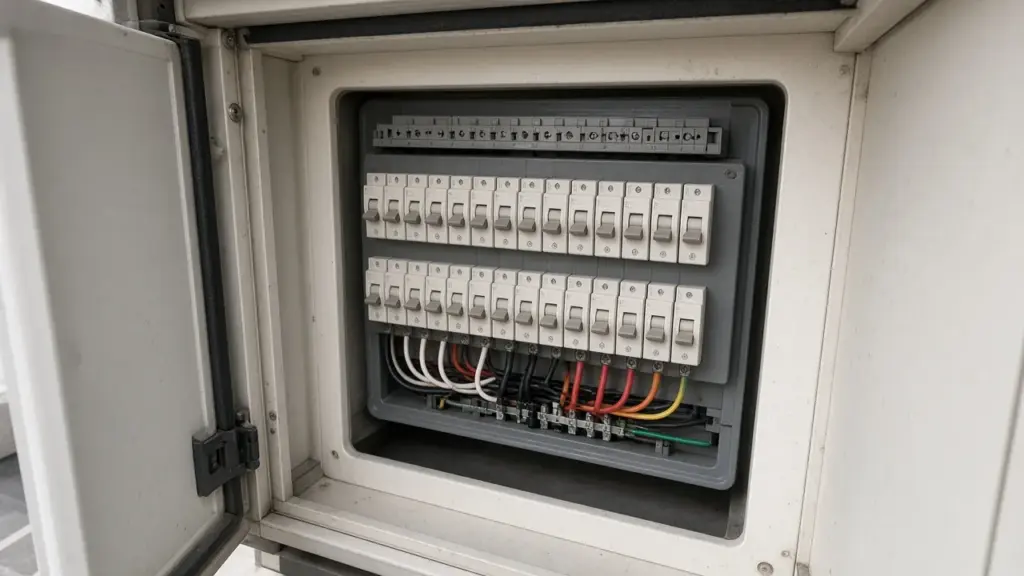
Inside your RV, the breaker panel divides power into individual circuits. Learn which breaker controls what:
- Label each breaker if it is not already labeled
- Note which outlets share a circuit
- Know where the main breaker is
If a single breaker trips repeatedly, you may be overloading that circuit. Moving a device to a different outlet on another circuit may help. If breakers trip often with normal use, have a technician inspect the system.
When the Pedestal Breaker Trips
Sometimes the breaker at the park’s pedestal trips instead of one inside the RV. If that happens:
- Turn off heavy loads inside the RV.
- Reset the pedestal breaker if you are permitted to do so.
- Turn loads back on one at a time.
If the pedestal breaker will not reset or trips repeatedly with light loads, stop and report it to management. At our park, tampering with electrical hookups is not allowed, and residents may not run cords from other sites. Our Residents page includes a maintenance request form.
Appliances Parks Commonly Restrict
Many parks restrict certain appliances because of safety or electrical demand. At our park, window air conditioning units and space heaters are not permitted. Use your RV’s built-in systems instead, and plan for seasonal changes. If you are unsure whether an appliance is allowed, ask before bringing it.
Seasonal Load Changes
Electrical load shifts with the seasons:
- Summer: air conditioners dominate. Stagger other loads carefully and keep AC filters clean.
- Winter: Texas cold snaps can bring freezing temperatures. RVs with electric heat strips or heat pumps may draw more power. Use your RV’s built-in heating options as designed.
- Storm season: outages and surges become more common. Unplug sensitive electronics during severe storms if advised.
Our post on making an RV hurricane plan covers how to prepare for outages.
Protecting Your Cords and Connections
Heavy loads generate heat at plugs and connections. Regularly:
- Inspect your shore power cord for damage
- Check plugs for discoloration or melting
- Make sure connections are tight and dry
- Replace damaged cords and adapters promptly
A plug that feels hot to the touch is a warning sign. Reduce load and have it inspected.
Planning for Remote Work
If you work from your RV, your computer, monitor, router, and other equipment add constant loads. A small battery backup unit can protect your work during brief outages or breaker trips. Plug sensitive equipment into quality surge strips.
A Simple Load Plan for Busy Mornings
Mornings are when many households trip breakers: coffee, breakfast, hot water, and hair dryers all at once. A simple plan helps. Start the coffee first, then run the microwave once the coffee is done. Take showers while nothing else heavy is running, and use the hair dryer after cooking is finished. If your air conditioner is cycling, give it a minute after startup before turning on another heavy appliance. After a week or two, the routine becomes automatic, and tripped breakers become rare.
Frequently Asked Questions
Why does my RV breaker keep tripping?
Usually because too many high-power appliances are running at once. Stagger heavy loads and check whether a single circuit is overloaded.
What uses the most electricity in an RV?
Air conditioners, electric water heaters, microwaves, heat strips, hair dryers, and similar heating appliances are typically the biggest loads.
Can I use a space heater at a long-term RV park?
It depends on the park. At our park, space heaters and window AC units are not permitted.
What should I do if the pedestal breaker will not reset?
Turn off loads, stop trying to reset it repeatedly, and report it to park management.
Ask About Electric Service Before You Move In
Electric service at Magnolia’s Finest is confirmed per site, so ask us about your RV’s needs before moving in. Our FAQ page answers common questions, and our amenities page describes our covered sites and laundry.
Check Availability or call or text (281) 205-1959
Magnolia’s Finest RV Park · 32020 Old Hempstead Rd, Magnolia, TX 77355 · Contact us