
30-Amp vs. 50-Amp RV Service: What It Means Day to Day
October 18, 2025 · By Magnolia RV Park
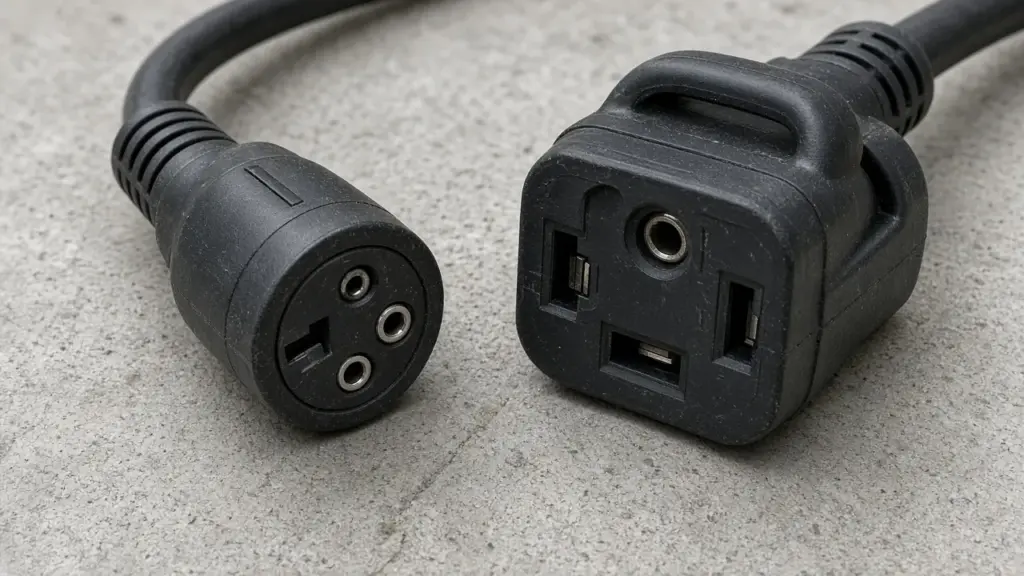
If you have ever tripped a breaker by running the microwave while the air conditioner was on, you already understand the practical side of RV electrical service. Most RVs are built for either 30-amp or 50-amp service, and that single detail shapes how you live day to day, especially during a long Texas summer when the AC rarely rests.
This guide explains the difference in plain terms, what each type of service can handle, how adapters fit in, and what to ask a park before you move in. For the broader picture of hookups, see our guide to RV hookups for long stays.
The Basic Difference
The numbers refer to the maximum current the service is designed to provide, but the real difference is in how the power is delivered.
30-amp service uses a three-prong plug and provides a single 120-volt line. At 30 amps, that works out to roughly 3,600 watts of available power.
50-amp service uses a four-prong plug and provides two separate 120-volt lines, each capable of 50 amps. That works out to roughly 12,000 watts of available power.
In other words, 50-amp service is not just a little more than 30-amp. It offers several times the capacity, which is why larger RVs with multiple air conditioners are usually built for it.
What Your RV Is Built For
Your RV’s electrical system is designed around one type of service. Look at your shore power plug: three prongs means 30-amp, four prongs means 50-amp. Your owner’s manual will also tell you.
Generally:
- Smaller travel trailers, many fifth wheels, and smaller motorhomes often use 30-amp service
- Larger fifth wheels and motorhomes, especially those with two or more air conditioners, often use 50-amp service
Knowing your RV’s needs is the first step. The second is confirming what the site provides.
Living on 30-Amp Service
Thousands of full-time residents live comfortably on 30-amp service. It just requires some awareness of what is running at the same time.
A typical rooftop air conditioner draws a significant share of 30-amp capacity when running. Add a microwave, an electric water heater element, a hair dryer, or an electric kettle, and you can exceed the limit quickly.
Everyday habits on 30 amps
- Run one high-draw appliance at a time
- Switch your water heater to propane when you need more electrical capacity, if your RV allows it
- Avoid running the microwave and hair dryer while the AC is cycling
- Use a coffee maker or toaster when the AC is off or at a lower demand
- Consider an energy management system that monitors your usage
With these habits, most people stop thinking about it after the first week or two.
Living on 50-Amp Service
50-amp service offers much more breathing room. You can typically run multiple air conditioners, cook, and use other appliances at the same time without tripping breakers. That is a big advantage in a hot climate.
Even so, 50-amp service is not unlimited. Each of the two lines has its own capacity, and if many high-draw appliances end up on the same line, you can still trip a breaker. Your RV’s panel determines which circuits are on which line.
Adapters: What They Do and Do Not Do
Adapters, often called dogbones, let you connect an RV to a different type of outlet. They are useful, but it is important to understand their limits.
- 50-amp RV to 30-amp outlet: You can connect, but you are limited to 30-amp capacity. You will need to manage your usage as if you had a 30-amp RV.
- 30-amp RV to 50-amp outlet: You can connect, but your RV will still only use 30-amp capacity because that is what it is built for.
Adapters do not create extra power. They just make the plugs fit. Always use quality adapters rated for the load, keep them dry, and inspect them for heat damage or loose connections.
Surge Protection Matters on Any Service
Regardless of amperage, protect your RV from power problems. A surge protector guards against spikes, and an energy management system can also protect against low or high voltage, which can damage air conditioners and electronics. Many full-timers consider this essential equipment. Plug the protector in and check its readings before connecting your RV.
What Trips Breakers and What to Do
When you exceed capacity, a breaker trips. That can happen at the park pedestal or inside your RV panel.
If a breaker trips:
- Turn off some high-draw appliances
- Reset the breaker inside your RV first
- If power is still out, check whether the pedestal breaker tripped
- If breakers trip repeatedly with light loads, stop and have the issue checked
Never tamper with park electrical equipment. At our park, residents may not alter hookups, remove breakers, run cords from another site, or pull more load than their RV is designed for. Our park rules explain the full policy.
Heat, Summer, and Electrical Load
In Southeast Texas summers, AC units run for long stretches, which uses much of your electrical capacity. Reducing heat gain helps your AC cycle less, which frees up capacity for everything else. Shade, window coverings, and clean filters all help. A covered site keeps direct sun off the roof. Our post on preparing your RV for Texas summer has more ideas, and our post on covered vs. uncovered RV sites in Texas explains why cover matters.
Questions to Ask a Park
Before moving in, confirm:
- What electric service does this specific site provide?
- Does it match my RV’s plug, or will I need an adapter?
- How is electricity billed, if separately?
- Are there any park rules about electrical use?
At our park, we confirm hookups for the specific site when you inquire rather than listing details we have not verified. That is the right approach at any park.
Working Professionals and Power Needs
If you work from your RV or keep medical equipment, laptops, or other electronics running, power reliability matters even more. Travel nurses and other contract workers often have tight schedules and cannot afford a tripped breaker before a shift. Our post on RV living for travel nurses and medical staff covers setting up an RV around demanding work.
Frequently Asked Questions
How much power does 30-amp RV service provide?
About 3,600 watts on a single 120-volt line. It can run one air conditioner and modest appliances if you manage what runs at once.
How much power does 50-amp RV service provide?
About 12,000 watts across two 120-volt lines, enough for multiple air conditioners and more simultaneous appliance use.
Can I plug a 50-amp RV into a 30-amp outlet?
Yes, with a proper adapter, but you will be limited to 30-amp capacity and will need to manage your electrical use.
Why does my RV keep tripping breakers?
Usually because too many high-draw appliances run at once. If breakers trip under light loads, have the system inspected.
Ask About Power for Your Site
At Magnolia’s Finest, we confirm hookups for the specific site before anything is reserved. Read our FAQ for common questions, then tell us about your RV, including whether it uses 30-amp or 50-amp service, and your dates.
Check Availability or call or text (281) 205-1959
Magnolia’s Finest RV Park · 32020 Old Hempstead Rd, Magnolia, TX 77355 · Contact us