
Awning Care and When to Roll It In
August 23, 2026 · By Magnolia RV Park
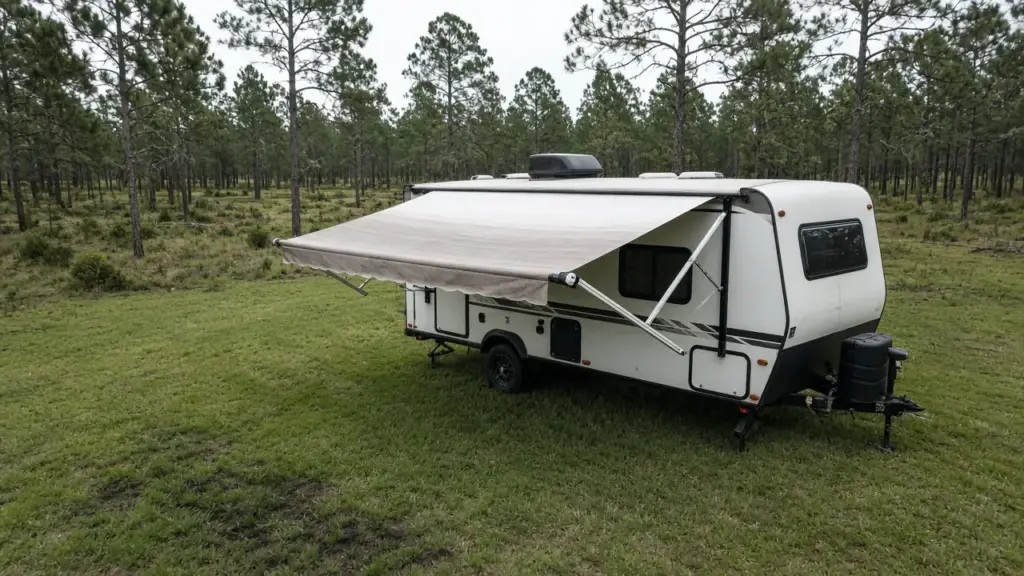
An RV awning adds shade and outdoor comfort, and in the Texas heat, it can help keep your RV cooler. But awnings are also one of the most easily damaged parts of an RV. Wind, rain, sun, and neglect can tear fabric, bend arms, and lead to costly repairs. Knowing how to care for your awning and when to roll it in keeps it working for years.
This guide covers awning care and safe use for long-term residents. For a complete maintenance routine, see our pillar, RV Maintenance for Full-Time Residents: The Complete Schedule.
Types of RV Awnings
Most RVs have one or more of these awning types:
- Manual awnings. Extended and retracted by hand using a crank or pull strap.
- Power awnings. Extended and retracted with a switch or remote.
- Window and door awnings. Smaller awnings over windows or doors.
- Slide-out toppers. Fabric covers over slide-outs that protect the slide roof from debris.
Fabric is usually vinyl or acrylic. Vinyl is water-resistant and easy to clean, while acrylic breathes better and dries faster.
When to Roll In Your Awning
Knowing when to retract your awning is the most important part of awning care. Wind is the biggest threat.
Roll in your awning:
- When wind picks up. Even moderate gusts can lift and damage an awning. Many manufacturers recommend retracting in winds above a certain speed; check your manual.
- Before storms. Thunderstorms can bring sudden gusts and heavy rain.
- When you leave. Do not leave your awning out when you are away from your RV, including when you go to work.
- At night. Weather can change while you sleep.
- During hurricane season alerts. Retract and secure awnings well before tropical weather arrives. Hurricane season runs from June 1 to November 30.
Some power awnings have wind sensors that retract automatically, but do not rely on them entirely.
Rain and Pooling
Rain can pool on an extended awning, adding weight that can bend arms or tear fabric. If you leave your awning out during light rain, lower one end so water runs off. In heavy rain, retract it.
Cleaning Your Awning
Regular cleaning prevents mildew and extends fabric life.
- Brush off loose debris, such as pine needles and leaves.
- Wash with a soft brush and a mild cleaner made for RV awnings.
- Rinse lightly.
- Let the awning dry completely before rolling it in.
Note that vehicle washing is not allowed at our park, so keep awning cleaning gentle and minimal, and ask management if you have questions about what is allowed.
Preventing Mildew
Southeast Texas humidity makes mildew a common problem. Never roll up an awning while it is wet for long periods. If you must retract it wet, extend it again to dry as soon as the weather allows.
Inspecting Your Awning
Include your awning in your monthly checks. Our post on a monthly RV maintenance checklist covers other items.
Look for:
- Tears, holes, or fraying in the fabric
- Mildew or stains
- Bent or damaged arms
- Loose mounting brackets
- Worn or damaged springs
- Proper operation of motors on power awnings
Record inspections and repairs in your maintenance log. Our post on keeping a maintenance log for your RV explains how.
Sun and UV Damage
Texas sun can fade and weaken awning fabric over time. Retracting your awning when not in use reduces UV exposure. Covered sites, like 8 of our 10 sites, provide additional protection from sun and rain.
Pests and Awnings
Wasps, spiders, and other insects sometimes build nests in rolled-up awnings. Check before extending. Rodents can also chew awning fabric and wiring; our post on rodent prevention for parked RVs offers tips.
Repairing or Replacing Fabric
Small tears can sometimes be patched with awning repair tape. Larger damage may require replacement fabric. Replacing awning fabric or arms can be tricky, especially with spring-loaded mechanisms, which can be dangerous. Consider a qualified technician for major repairs. Extensive mechanic work is not allowed at our park, so plan significant repairs at a shop or with a mobile tech after checking with management.
Park Rules to Keep in Mind
Your RV’s built-in awning is part of your RV. However, freestanding shade items like umbrellas and tents are not allowed at our park, and items cannot be stored on or under the site. Do not attach tarps or extra covers to your awning, since tarps and covers are prohibited.
Awnings and Cooling
A properly used awning can shade windows and walls, helping reduce heat buildup inside your RV. On hot, calm days, extending the awning on the sunny side can make a noticeable difference. Just remember to retract it when the wind picks up or when you leave.
Travel Precautions
Before moving your RV, make sure the awning is fully retracted and secured. Check travel locks if your awning has them. An awning that unrolls while driving can cause serious damage and create a hazard for other drivers.
Making It a Habit
The simplest way to protect your awning is to make retracting it a habit. Many residents treat it like locking the door: whenever they leave the RV or go to bed, the awning comes in. This one habit prevents most wind damage. Some people keep a small note by the door as a reminder until it becomes automatic.
If you share your RV with a partner, agree on who checks the awning before leaving. It is easy for each person to assume the other took care of it. A quick “awning in?” before heading out can save an expensive repair.
Understanding the Costs of Neglect
Awning damage is one of the more common RV repairs, and it can be surprisingly expensive. Replacing fabric, arms, or a motor on a power awning can cost a significant amount, and a badly damaged awning can also damage the side of your RV when it tears loose. Compared with those costs, a few seconds spent retracting the awning is a small investment. Regular cleaning and inspection add years to its life and keep it looking good.
Seasonal Awning Care
At the start of summer, give your awning a thorough cleaning and inspection, since you are likely to use it most during the hot months. Before hurricane season, make sure it retracts smoothly and that travel locks work. In fall and winter, when you may use it less, keep it retracted and dry to prevent mildew. Adjusting your care to the seasons keeps your awning ready when you need it.
Being Considerate of Neighbors
An awning that is damaged or flapping in the wind can be noisy and may even strike a neighboring RV. Keeping your awning retracted in wind and in good repair shows consideration for the people around you.
Frequently Asked Questions
When should I roll in my RV awning?
When wind picks up, before storms, when you leave, at night, and before tropical weather.
How do I prevent mildew on my awning?
Let it dry completely before rolling it in, and clean it regularly.
Can I add a tarp to extend my awning?
No. Tarps and covers are not allowed at our park.
Can I repair a spring-loaded awning myself?
Spring mechanisms can be dangerous. Consider a qualified technician.
Enjoy Shade and Comfort in Magnolia
Explore our amenities, review our park rules, or check availability.
Check Availability or call or text (281) 205-1959
Magnolia’s Finest RV Park · 32020 Old Hempstead Rd, Magnolia, TX 77355 · Contact us